Apple's Vision Pro - Please Don't Laugh!

This article first appeared on W&V Online.
No one can currently avoid the product release of the new tech gadget from Apple. The announcement of the device already made waves last year and has been officially available for purchase since February 2nd (at least in America). And as if someone pressed a button, a wave of YouTube videos, memes, tech reviews, opinions, and social media posts now floods the public, often revealing a skeptical or even mocking view of the new data glasses.
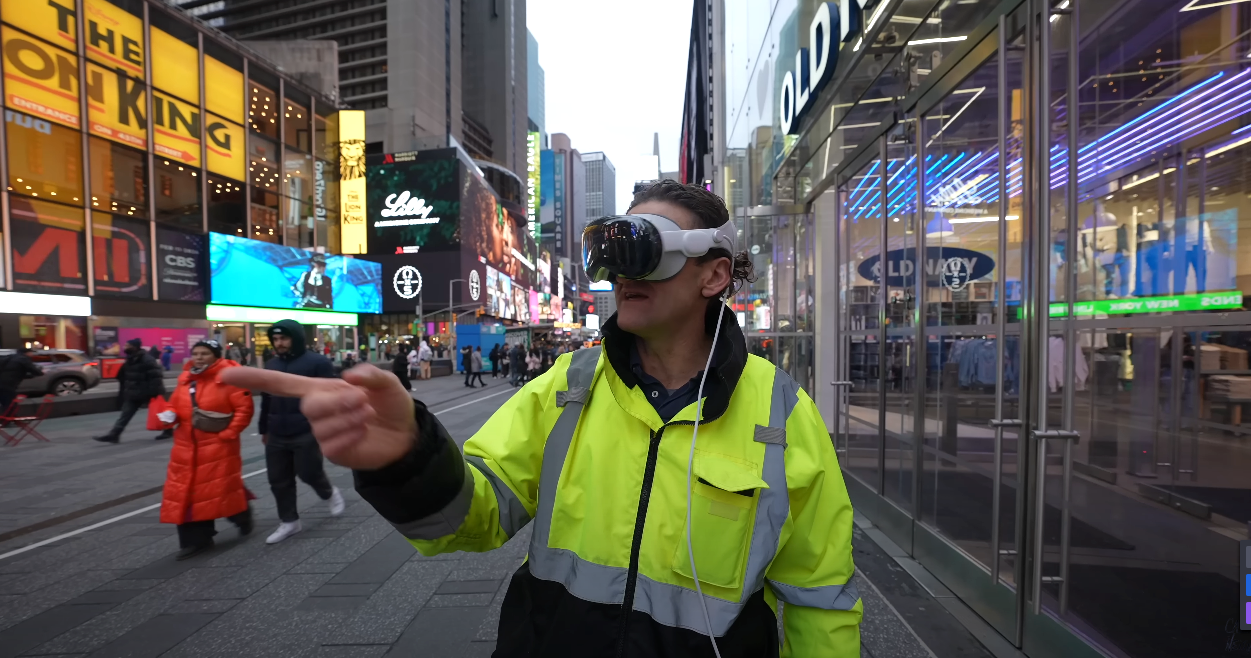
It's naturally easy to make fun of it. Nerds ride the subway with the glasses, making awkward gestures. Another films the reactions of passing pedestrians. A tech influencer compares the color fidelity of reality with the video display of the pass-through and soberly notes that reality indeed has more colors, while another points out the unnaturalness of the eye projection on the outer display. And for those who haven't had enough of the criticism, just look at the accompanying comments and you'll feel like you're in a new episode of Black Mirror.
The Apple Vision Pro is for Professionals
And I understand all of that. It's unfamiliar, and not every use of the glasses makes sense. Nevertheless, I believe that all the tech reviews and current influencer content convey a distorted idea of the product. When an influencer films themselves walking through Times Square with the glasses, it primarily serves their followers and caters to the attention mechanisms of their market. But one thing should be made clear: the glasses cost almost $4000. It's highly unlikely that anyone would buy these glasses without a professional need. Even less likely is that this person would walk through New York with such glasses. So, an image is being created that doesn't do justice to the matter. The glasses are not intended as a tool for everyone. That's why they're called "Pro." But if you follow the current reports online, you might get the impression that this is exactly Apple's intention. It is not.
The Apple Vision Pro encompasses the entire scope of a digital office day
When you look at the Apple Vision Pro, you have to think in a different direction. Unlike other VR glasses on the market, Apple's glasses have a complete computer work infrastructure. So, you don't just use proprietary application software with limited content. With the Apple Vision Pro, users have the entire scope of a digital office day: emails, video calls, presentation software, spreadsheets, etc. And not just as another device, but with the option to integrate physical space and virtual spaces into the digital workplace.
Reality, digital communication, and personal work merge into one tool
Therefore, you don't have to make fun of the fake expressions of the artificially generated head movements of the avatars. The glasses do not aim to replace a FaceTime video call or physical meetings. The virtual twin of the users exists purely for UX design reasons. What should one do when called while in a work situation? Quickly take off the glasses, open the computer, fix your hair beforehand, and then try to regain focus to continue in a separate environment? That's not the idea of such a mixed-reality tool. Rather, the idea is that all levels—reality, digital communication, and personal work—merge into one tool. The artificial image of oneself is the missing link to enable natural collaboration with other colleagues in a digitally extended space.
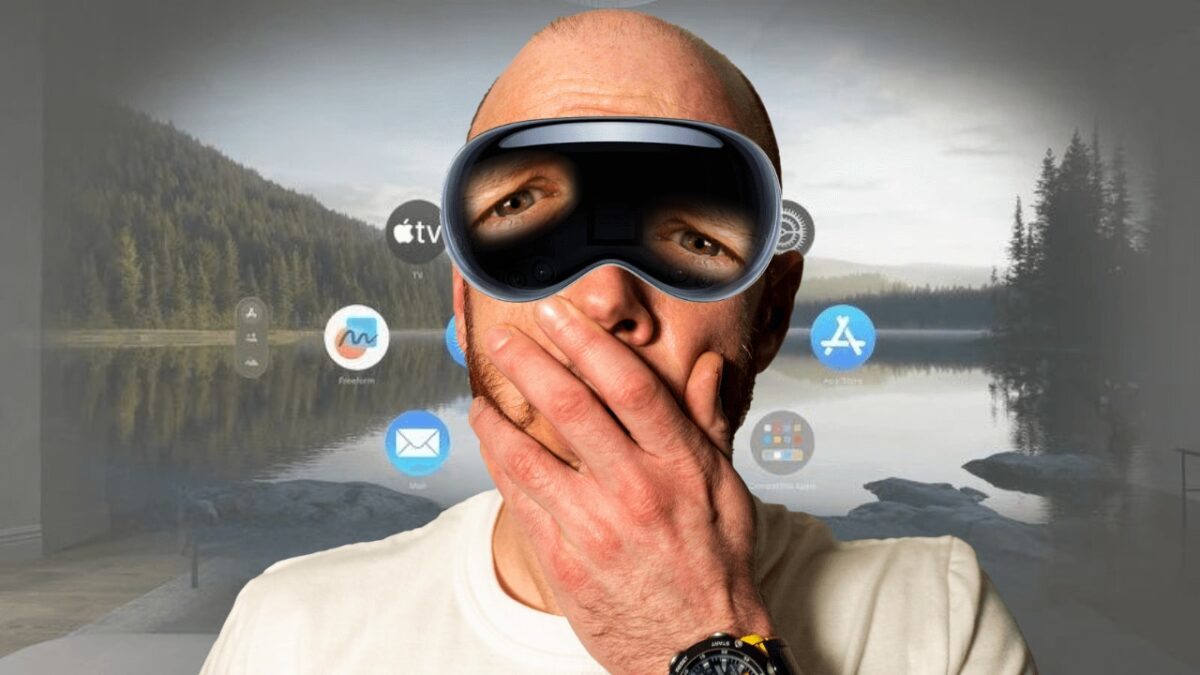
The same applies to the outer display. Anyone who has ever used a VR headset with a pass-through function knows the situation where the same people in the room don't know whether you can perceive them or your surroundings. This leads to funny encounters but is, of course, a constant distraction for the users and others in the room.
Apple has done with the glasses what they always do with their product design: reduced another user experience design hurdle through an analogy from reality. This is a design principle called skeuomorphism and is why Apple's first calendar looked like a Filofax. Of course, you couldn't flip through it, but the idea of entering appointments into an overview was explained without explicitly saying so. So, it's not primarily about whether the eyes look natural; it's about the fact that there are any at all.
Battery: not integrated, but improved wearing comfort
The battery also faces a lot of criticism. Not only because it is not integrated and is connected via cable, but also due to the supposedly short battery life of 2 hours. I'm sure Apple will improve this in further iterations. However, Apple has paid great attention to ensuring that the weight is not too high for the user to improve wearing comfort. Additionally, depending on the work situation, the size of the battery can be easily changed or even completely replaced for longer use times. This is not easily possible with built-in batteries.
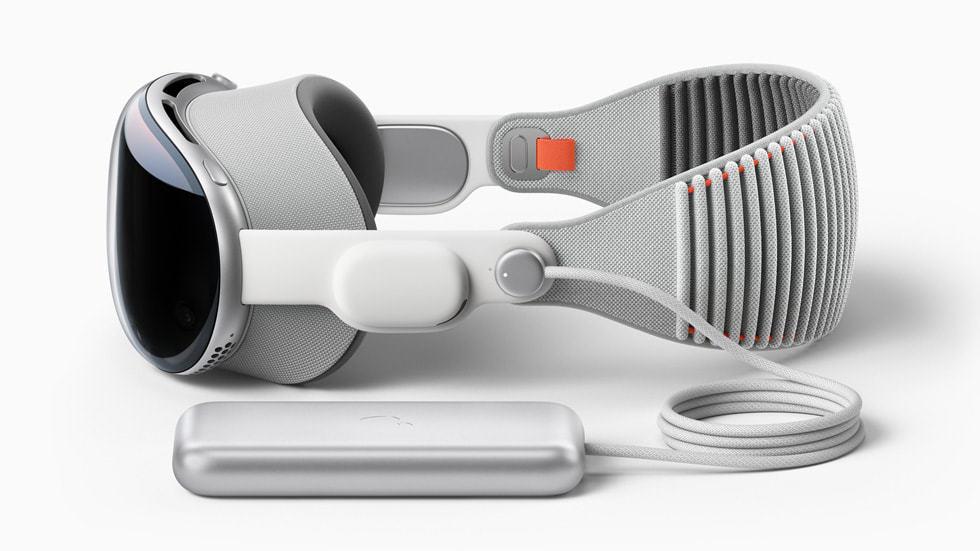
Moreover, one must be aware that all VR glasses require a constantly high computing power. The computing power is not only used for the apps but these glasses constantly create a virtual space and calculate all elements in real-time. You have to imagine it as if you were playing a demanding 3D game on your phone and streaming it simultaneously in a video conference. Our smartphones would all be at 25% battery after an hour. But sure, you can't manage an 8-hour workday with the VR glasses' battery. But is that really a problem? My laptop is plugged in all day, and I only use the battery in meeting rooms or on the go.
Of course, current VR devices represent a new category in the use of digital tools. The handling must be understood and learned, and this will lead to acceptance by many people in the long run. When the iPhone was invented, many people also wondered why you needed the display, and many stuck with the keypad phone. If you look at smartphone usage today, making calls is a peripheral function.
Upcoming use cases will reveal the purpose of the glasses
In the coming months, we will see more and more use cases that clarify the actual purpose of the glasses. Companies with remote employees will find that $4000 per device costs less than 3 intercontinental business flights per year. People with limited mobility will be able to participate more inclusively in society, and many learning applications and game apps will provide education, training, and entertainment.
How relevant the product is from Apple's perspective is shown by the American online store. The glasses have their own point in the main menu, right after the iPhone and the Apple Watch. It is a new category. Not just for the online store—for the company and us humans.