Insights: How We Used SparkAR for the Bauhaus100 Face Filter
, Demodern

What did you aim to achieve with the project?
To answer a question with another question: Have you ever wanted to transform an iconic artwork into another art form?
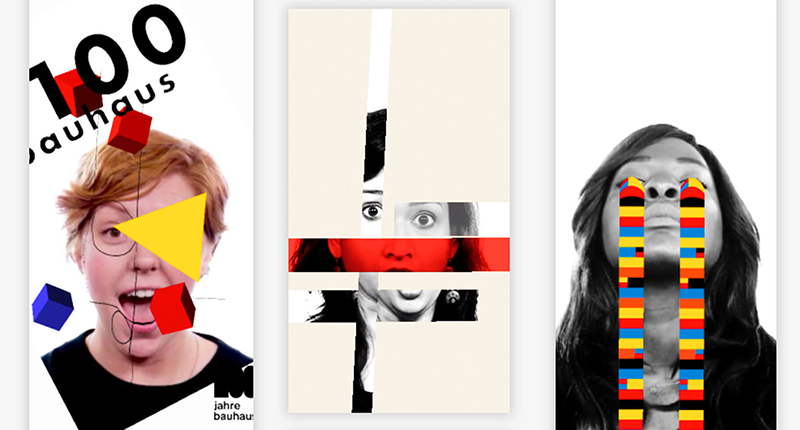
That's what we did - at least we approached the German National Tourist Board with this idea to celebrate the 100th anniversary of the Bauhaus movement. Through a social media campaign, we wanted to translate the Bauhaus masters and their disciplines into a digital medium to bring them closer to a new generation. For this, we originally wanted to create 100 AR face filters for the grand 100th anniversary (we didn't quite reach 100, but as the saying goes, it's the thought that counts).
What technical challenges did you have to face, and how did you solve them?
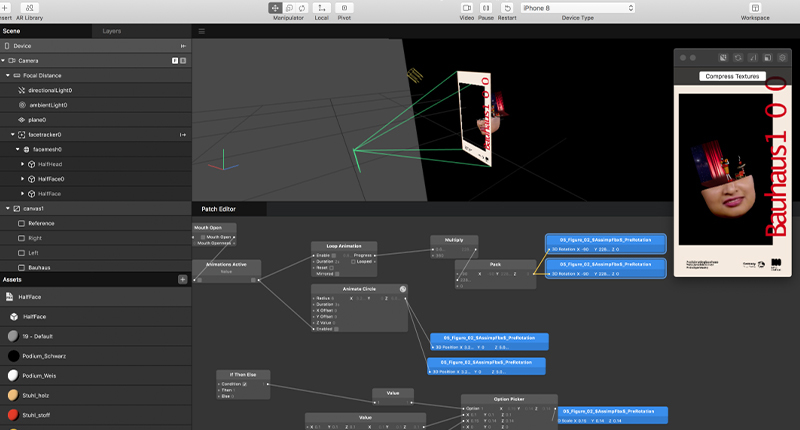
That was definitely SparkAR - the tool was still quite in its "infancy" when we started. To create visually stimulating effects, makeup layers, and three-dimensional masks, we had to virtually "hack" Facebook's open software. Iconic works were iterated and reconstructed, interacting with the artworks through facial recognition and expression. These new forms of interaction were unfamiliar to us, and we were stepping into exciting new territory!
What does winning an FWA Award mean to you?
This exciting feeling right after we hit 'submit' is simply unique... With each page refresh, our stomachs are full of butterflies, and when you finally reach the 80-point threshold and the project ends up winning, it's an exhilarating feeling. Not to mention the visibility of the platform. #FWA100 is definitely our goal!
Tools used:
- Talent & passion! Editor's note: *Yawn*
- Adobe Photoshop CC
- Spark AR Studio
Three hot facts:
- Steve Jobs was inspired by the Bauhaus philosophy
- There is a "BauhausLand" in Germany
- The fusion of art and technology is the core of Bauhaus - similar to us, though we call it Creative Technologies