Driving a Gadget
, Demodern

Who doesn't know it? You click through the web without rhyme, reason, or a concrete goal. You find yourself on the strangest sites, on YouTube videos of billy goats scratching their horns on their butts, or, like on this day, in a BMW contest: test drives with a BMW i3 were being raffled. Pretty cool, actually, such an electric car, I thought. But why would I want to win that? If an electric car test drive, then I'd rather go with a Tesla.
How do you get a sports car test drive if you can't even afford a used compact car? I called Tesla and got through to an eloquent young lady, trained to learn about my financial background: "Just so we know what you'll be comparing our car to... what are you driving at the moment?" I told her about my girlfriend's old, rusty Ford Fiesta. That was enough – I had my Tesla test drive. And I was even allowed to bring someone along.
What’s better than a test drive appointment for one of the most advanced and fastest cars in the world? Doing it during work hours. The only car enthusiast in the Hamburg team became my accomplice. Apart from the occasional YouTube video on the "Insane" mode, neither of us had any experience with a Tesla.
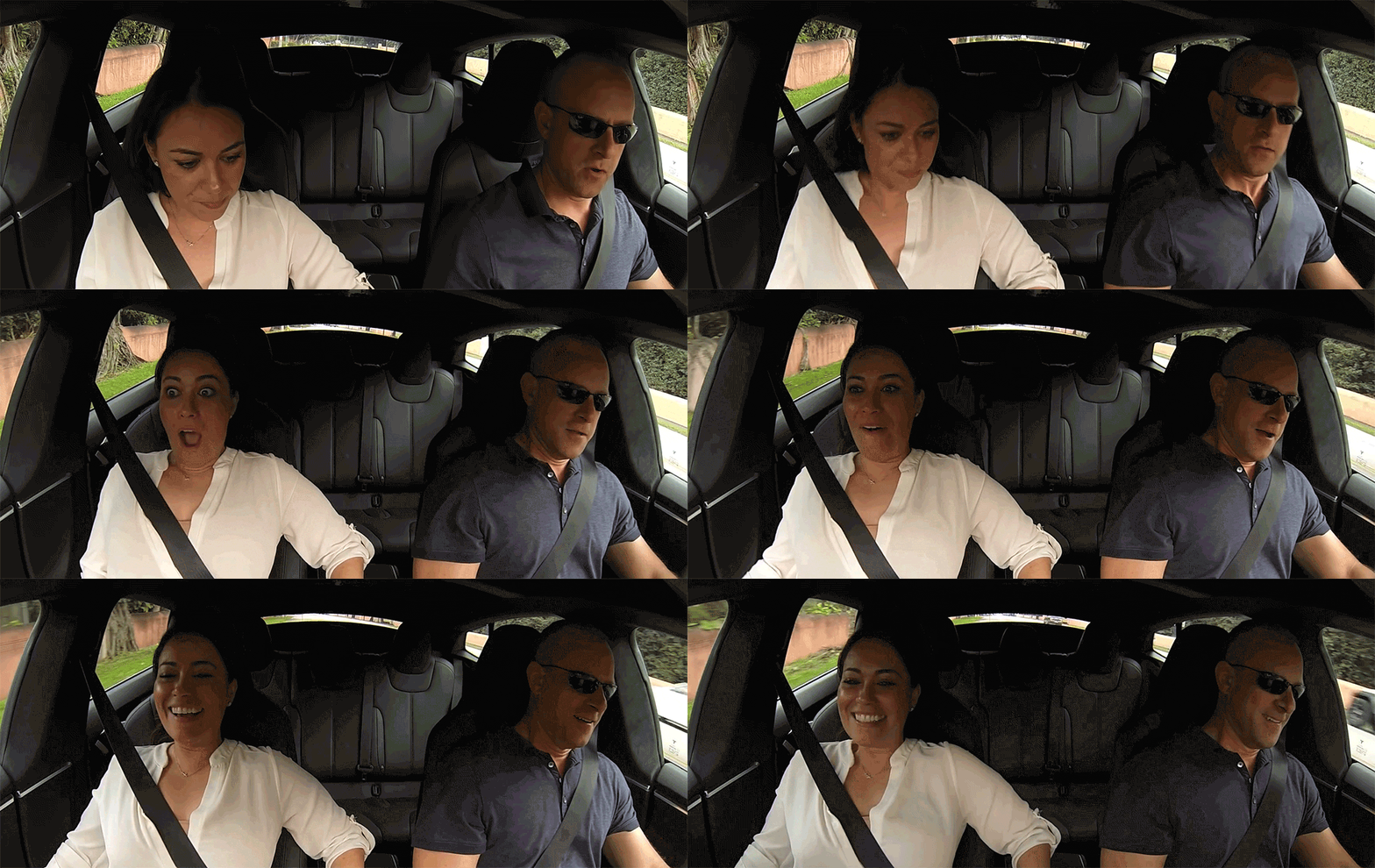
So this is what it looks like: The Insane mode.
It's time
Equipped with a smartphone navigation system with outdated map data and a 20-year-old station wagon, we set off for Poppenbüttel.
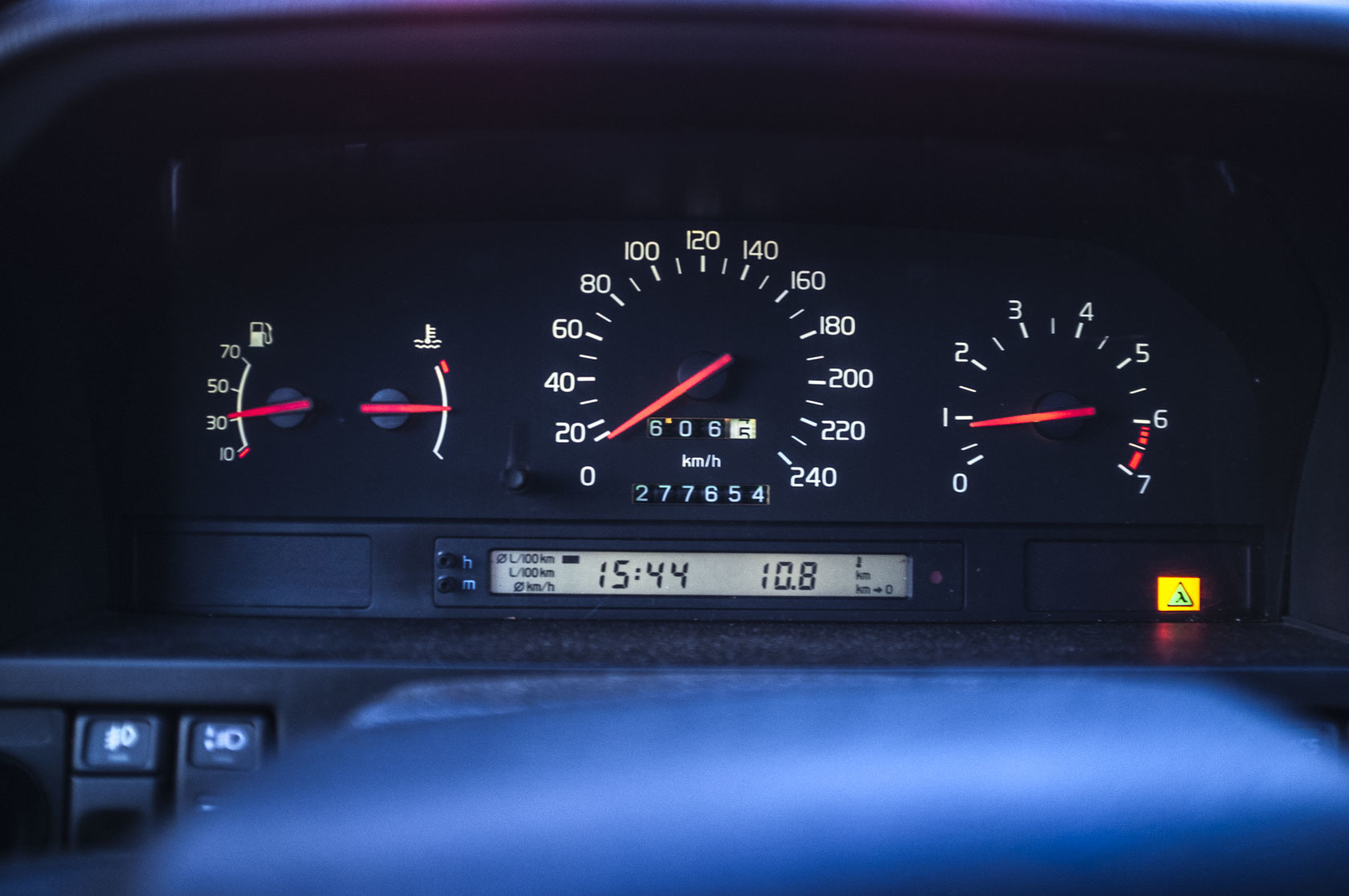
15:44, 10.8 liters consumption. The lambda sensor is glowing.
Somewhere in the industrial area, the shiny Tesla showroom was supposed to be waiting for us. At least that's what we imagined.
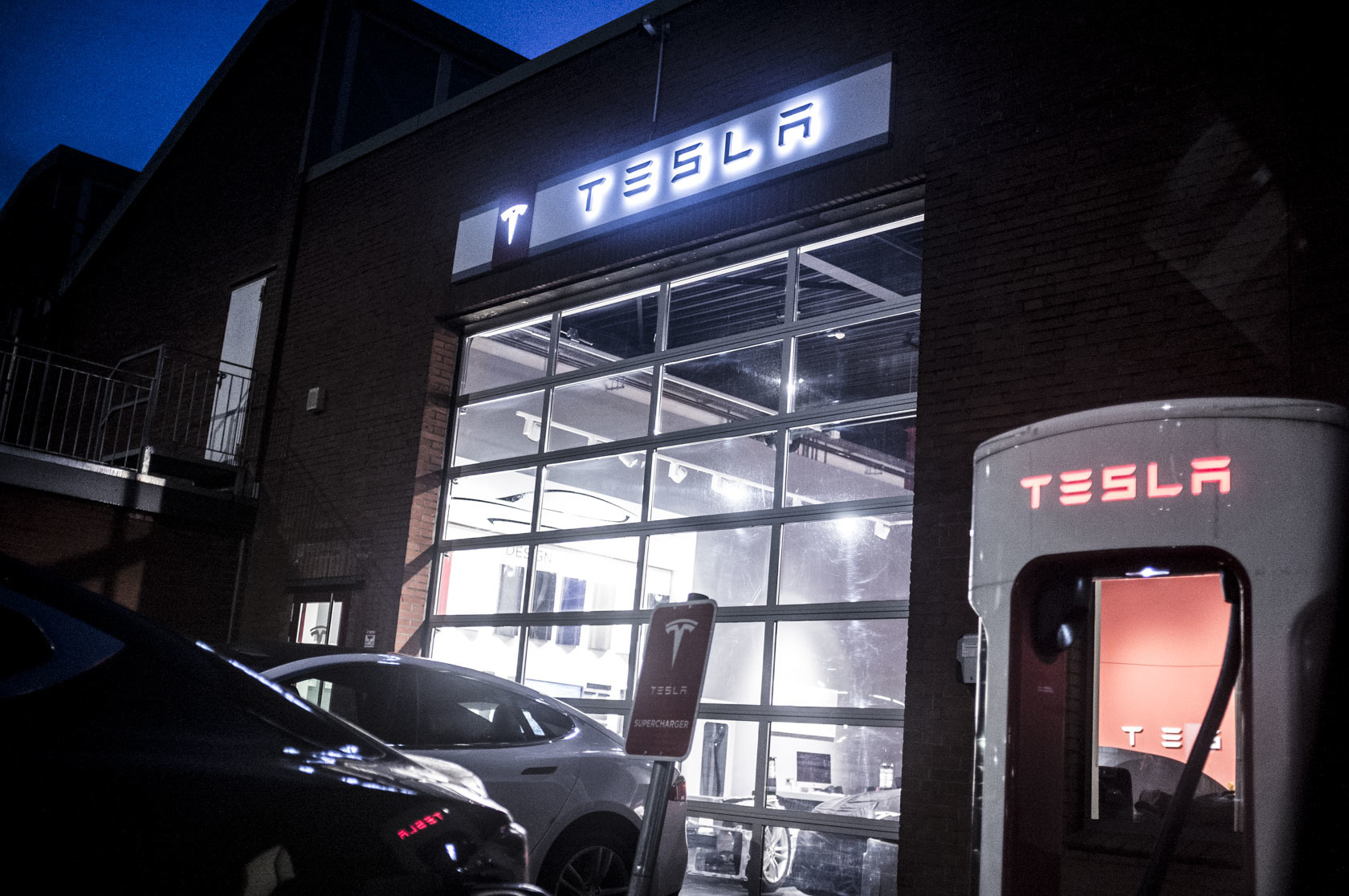
Glowing in the Dark. The Tesla garage is brimming with electricity. The charging stations have a chic retro-future touch.
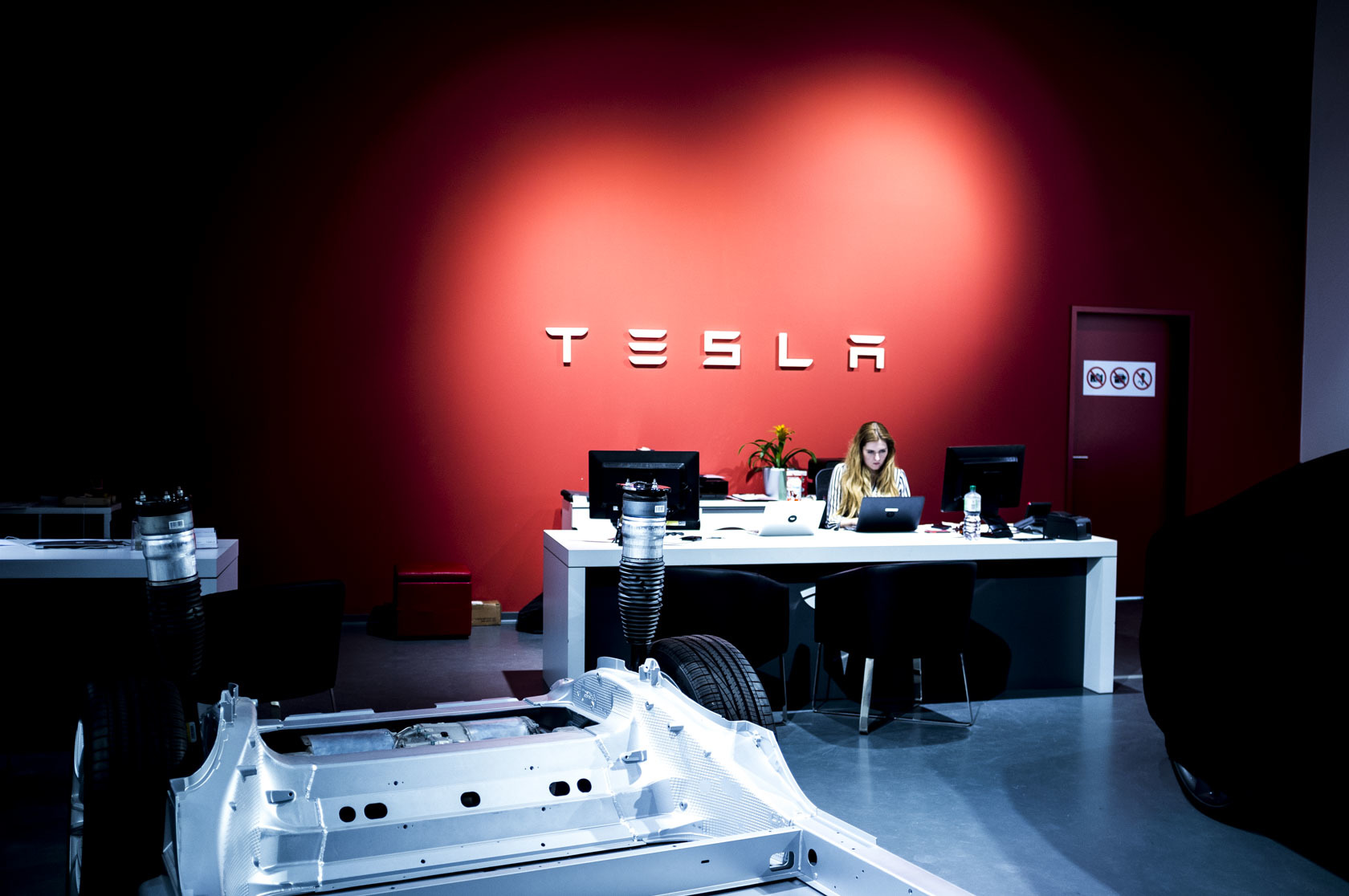
A heart for Tesla. Red is a theme.
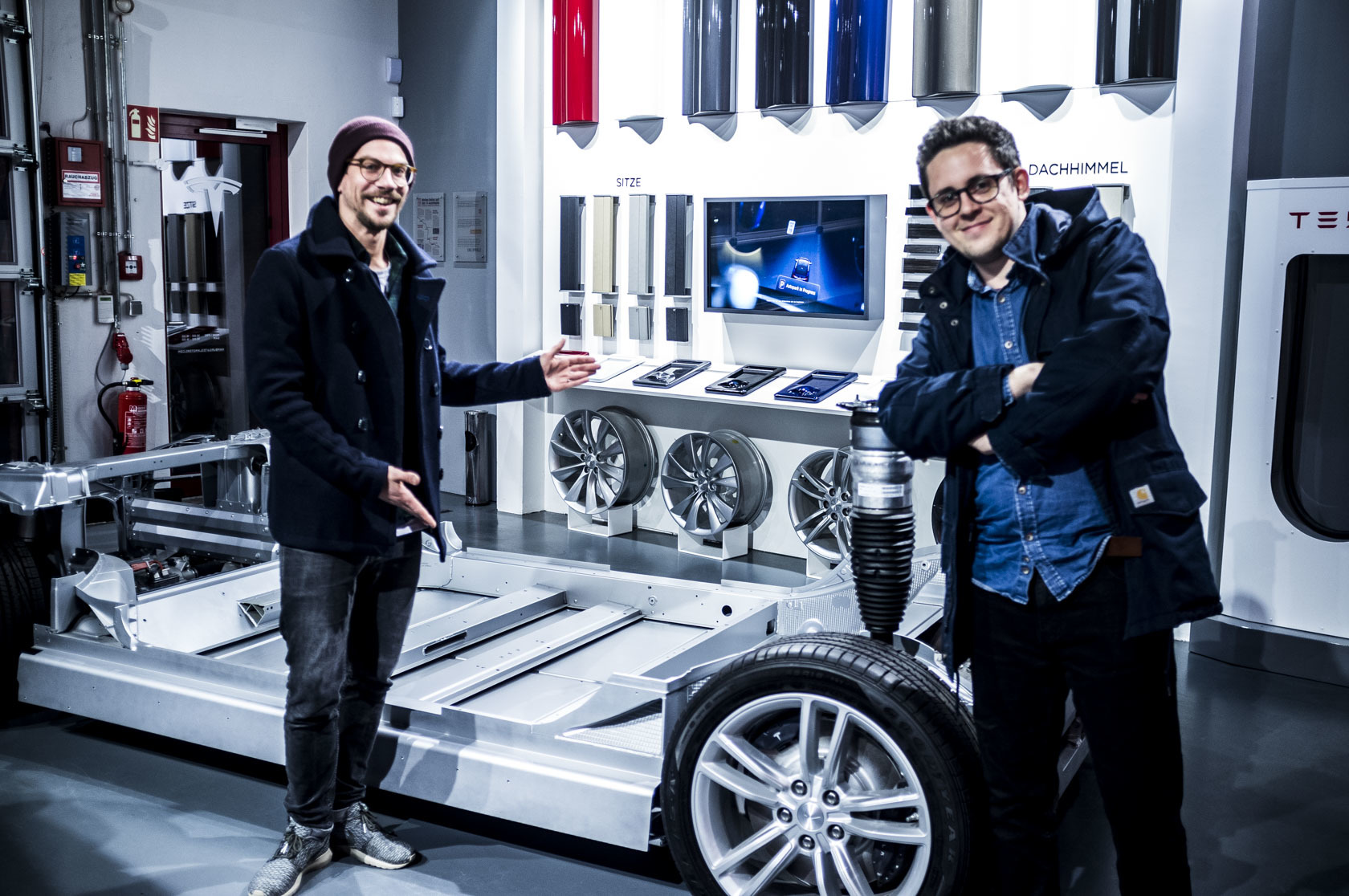
Paint samples, configurator, car shell – presented by the Demodern number boys.
After entering our personal data into a tablet and declining the newsletter declaration, we received a brief introduction to the Model S's structure and specialties based on the chassis.
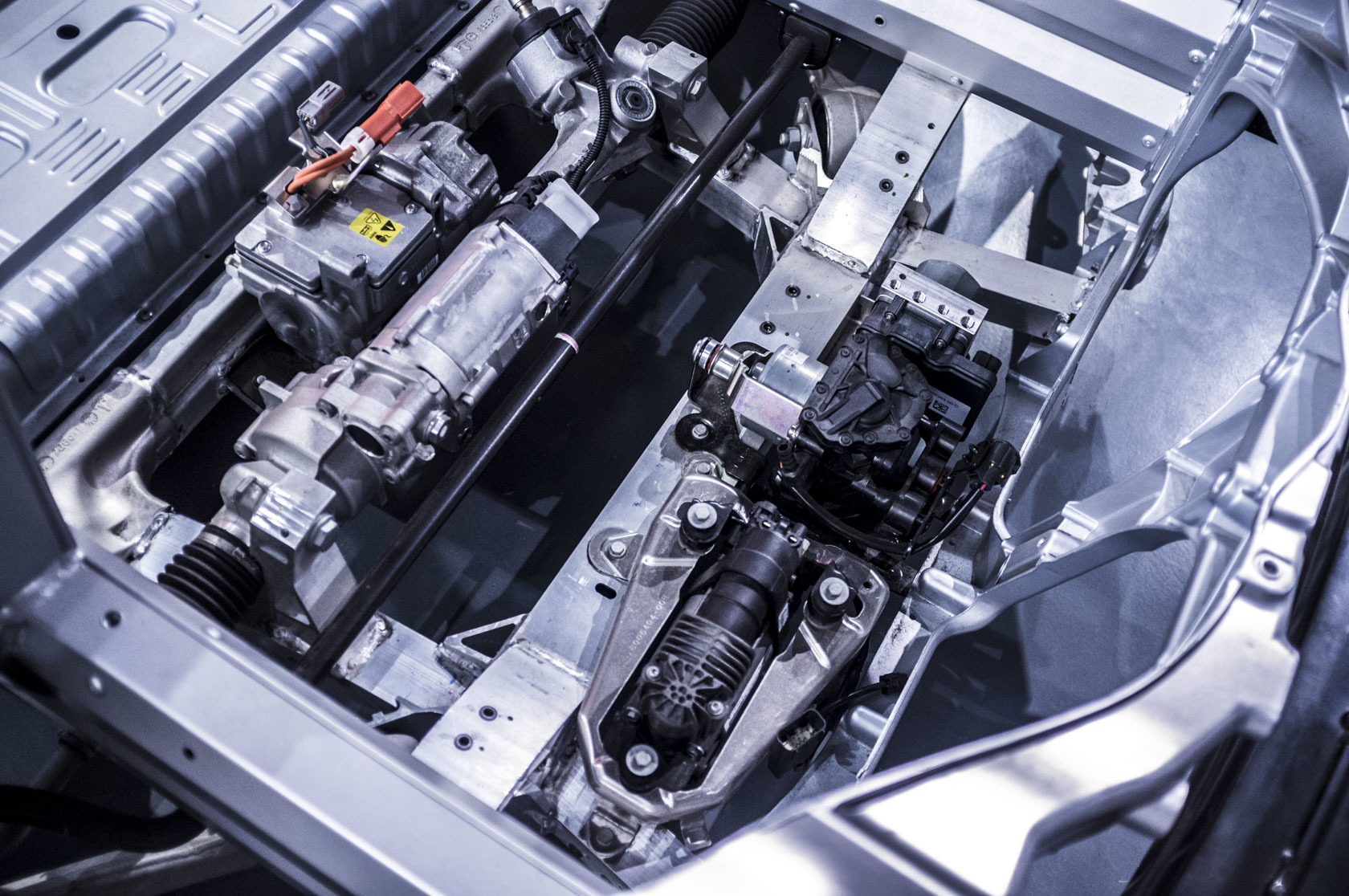
Under the hood. Not much can break: air conditioning compressor, control unit, and voltage thing. In the rear, there's only the melon-sized electric motor.
The chassis is a kind of shell. Equipped only with the absolutely necessary mechanical components (e.g., air conditioning and electric motor), it serves as the basis for the automotive functions, all of which are completely controlled by software. Steering, braking, accelerating, interior lighting, controls, ... – everything can theoretically be revised and controlled via software. This allows Tesla to provide its customers with the autopilot function, for example, through a simple software update.
Skeptical, anxious, and cautious people might now argue that this means every Tesla can be hacked and remotely controlled. True: Tesla has a competition running, offering anyone who manages to hack a vehicle a Model S. So, go for it!
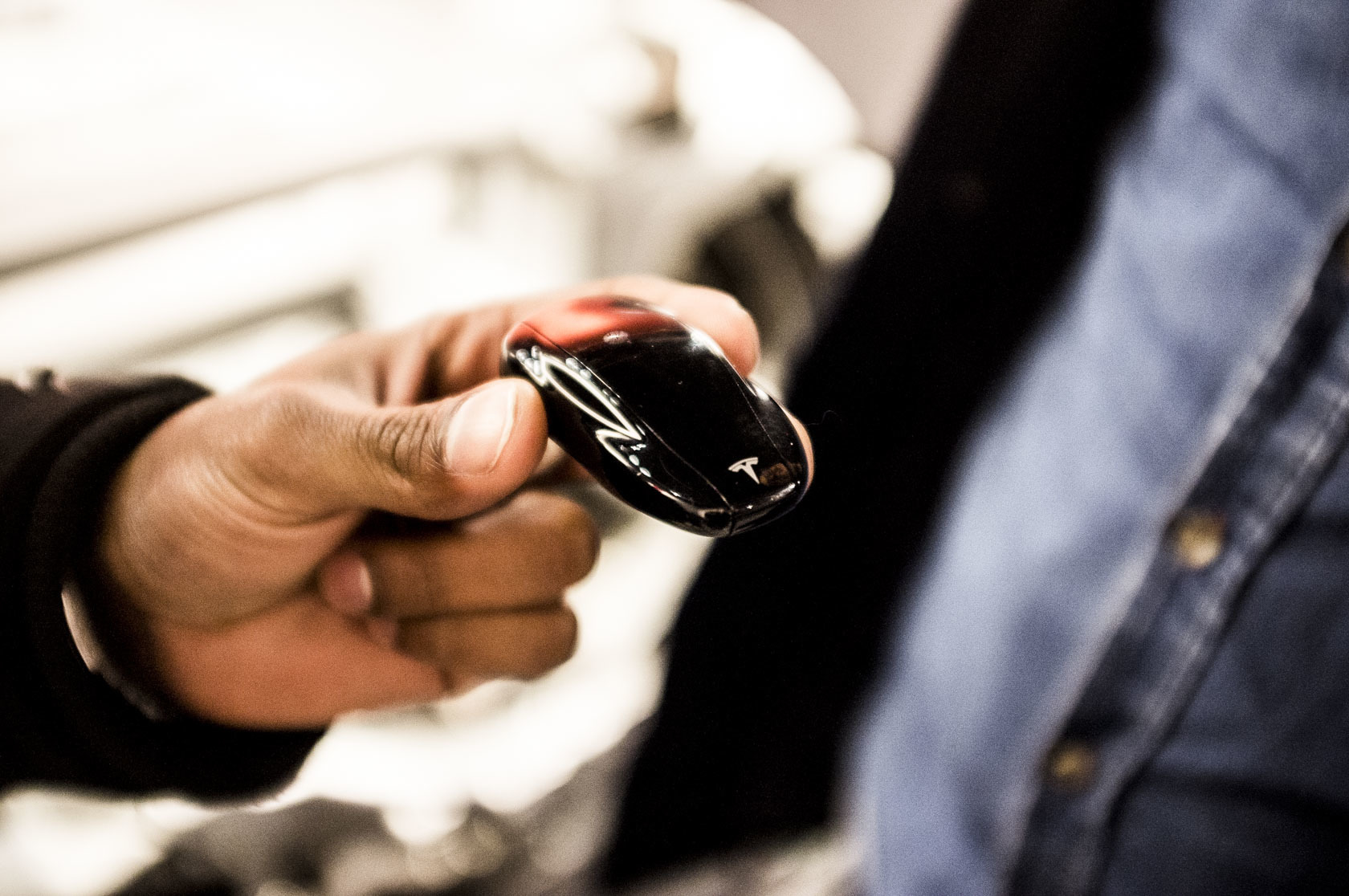
The car key: Isn't there an app for that?
After the introduction, the salesperson handed us a miniature Tesla: the car key.
Equipped with three buttons – on the roof, hood, and trunk.
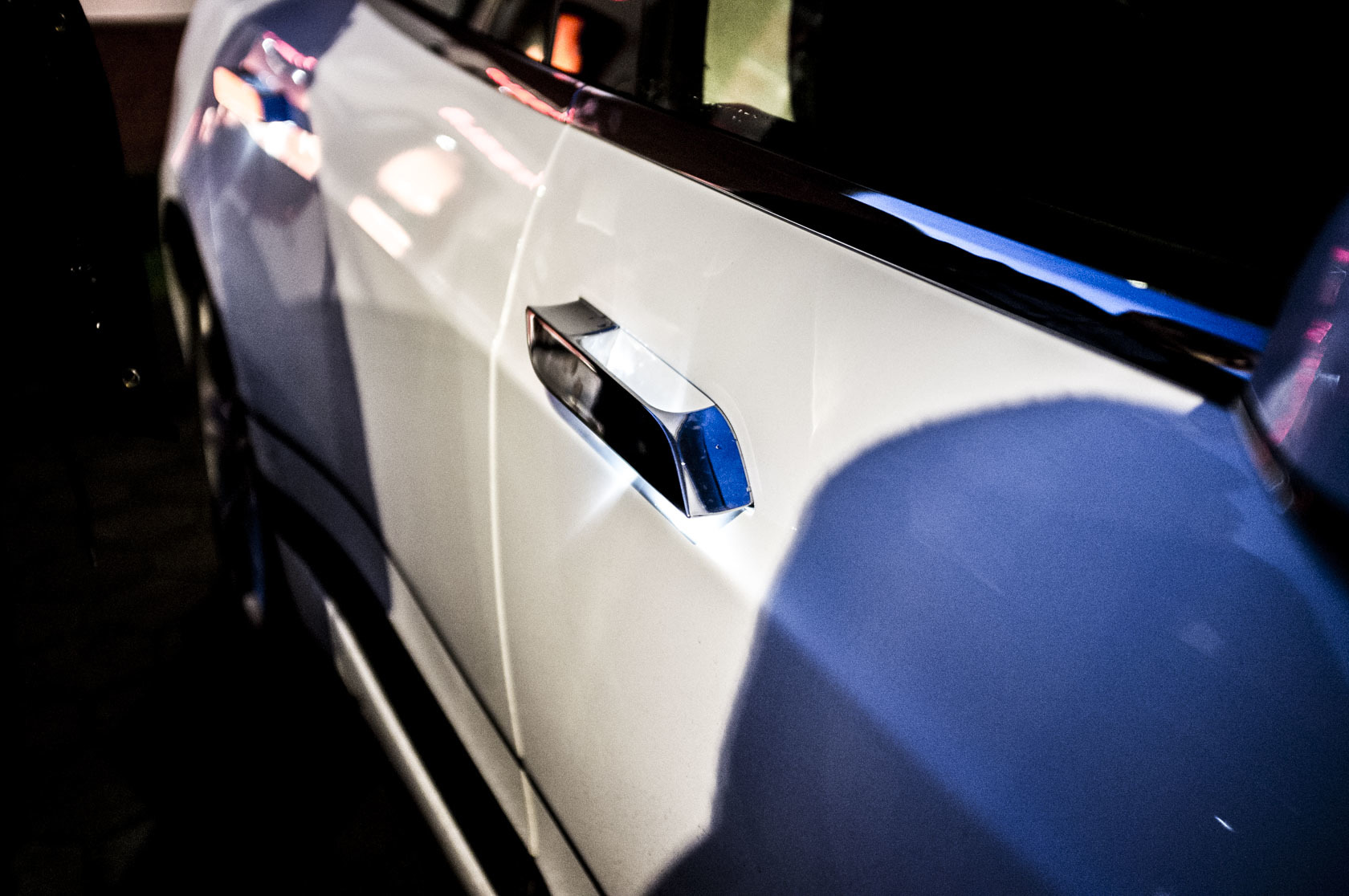
As soon as you approach the car with the key, the door handles automatically extend and are illuminated.
The Test Drive
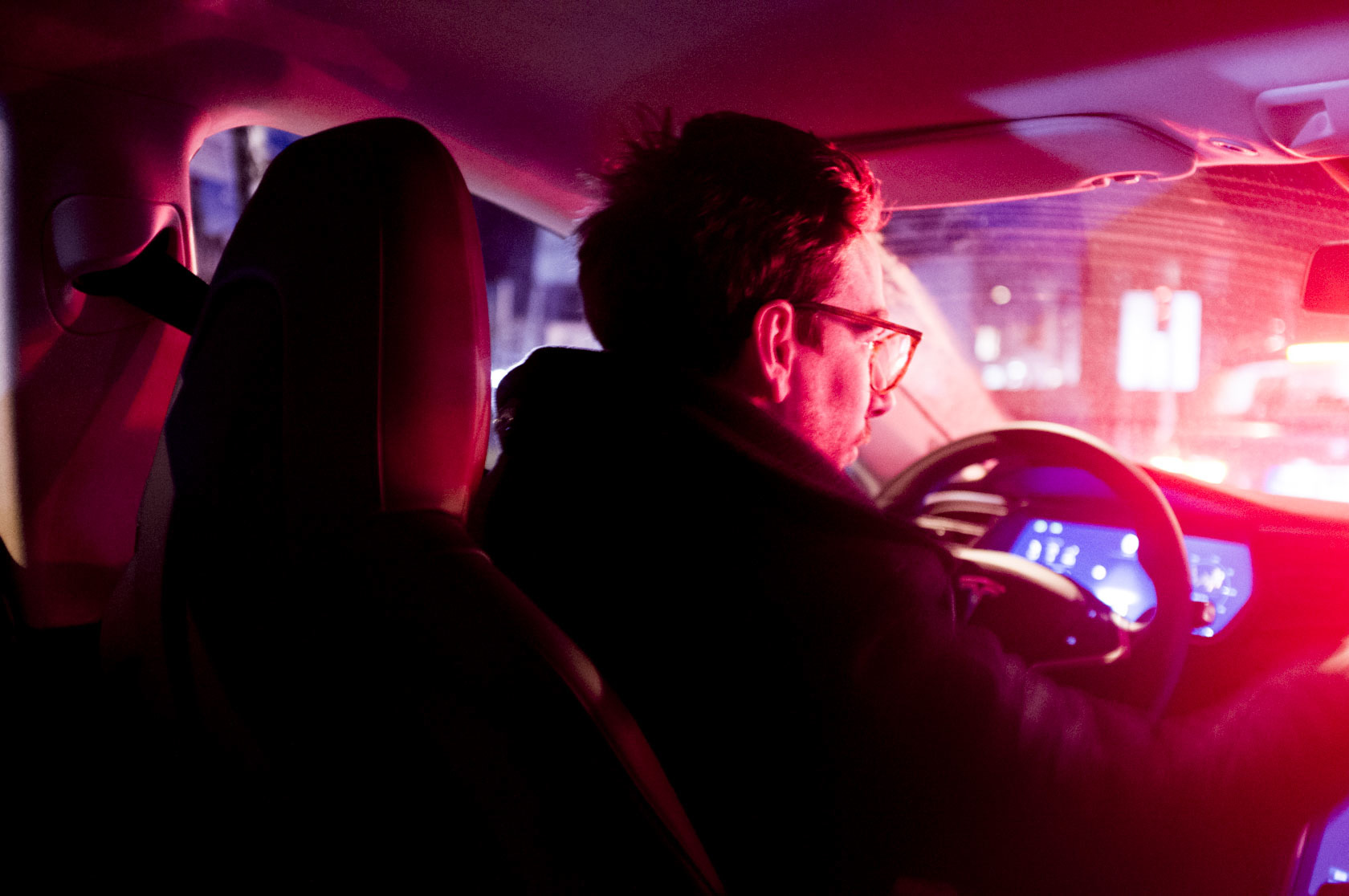
Just before the kickdown at the traffic light. Red is a theme.
Flo, designer, driving a Volvo station wagon from '94 for 12 years, can open the tailgate in 3.2s.
Christopher, developer, proud owner of a driver's license for a year, can handle a Ford Focus with a manual transmission.
Tesla Model S, Insane, on the German market for 4 years, from 0 to 100 in 3.2s, can accelerate without gear interruptions.
This combination promised a lot of fun for everyone involved: kickdowns on empty roads, G-force addiction, 007 Easter eggs in the interface, and an always-friendly Tesla companion who didn't necessarily encourage us to drive slower.
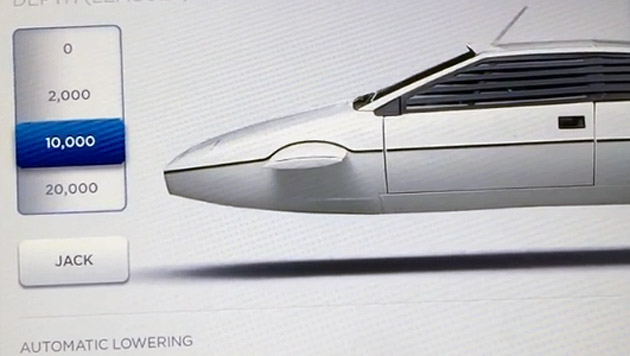
The James Bond Easter egg: Long-touch the Tesla logo, enter 007 as the code, and instead of a Tesla, you get the submarine car from "The Spy Who Loved Me" displayed in the interface. We like.
During the test drive, we not only learned what it means to chase 2.1 tons of lithium like a cat through the streets, but also that you can charge Teslas for free for a lifetime.
This driving experience, the modern product design approach, and the fact that these "automotive newcomers" are casually shaking up the entire auto industry completely thrilled us.
It wasn't the Prius approach, which constantly reminds us how sensible (and ugly) cars can be. Tesla's intention is clearly the Joy of Use. They impress drivers with the impressive performance made possible by electric motorization and combine it with constantly evolving, user-centered comfort and gadget functions. Service design in the car.
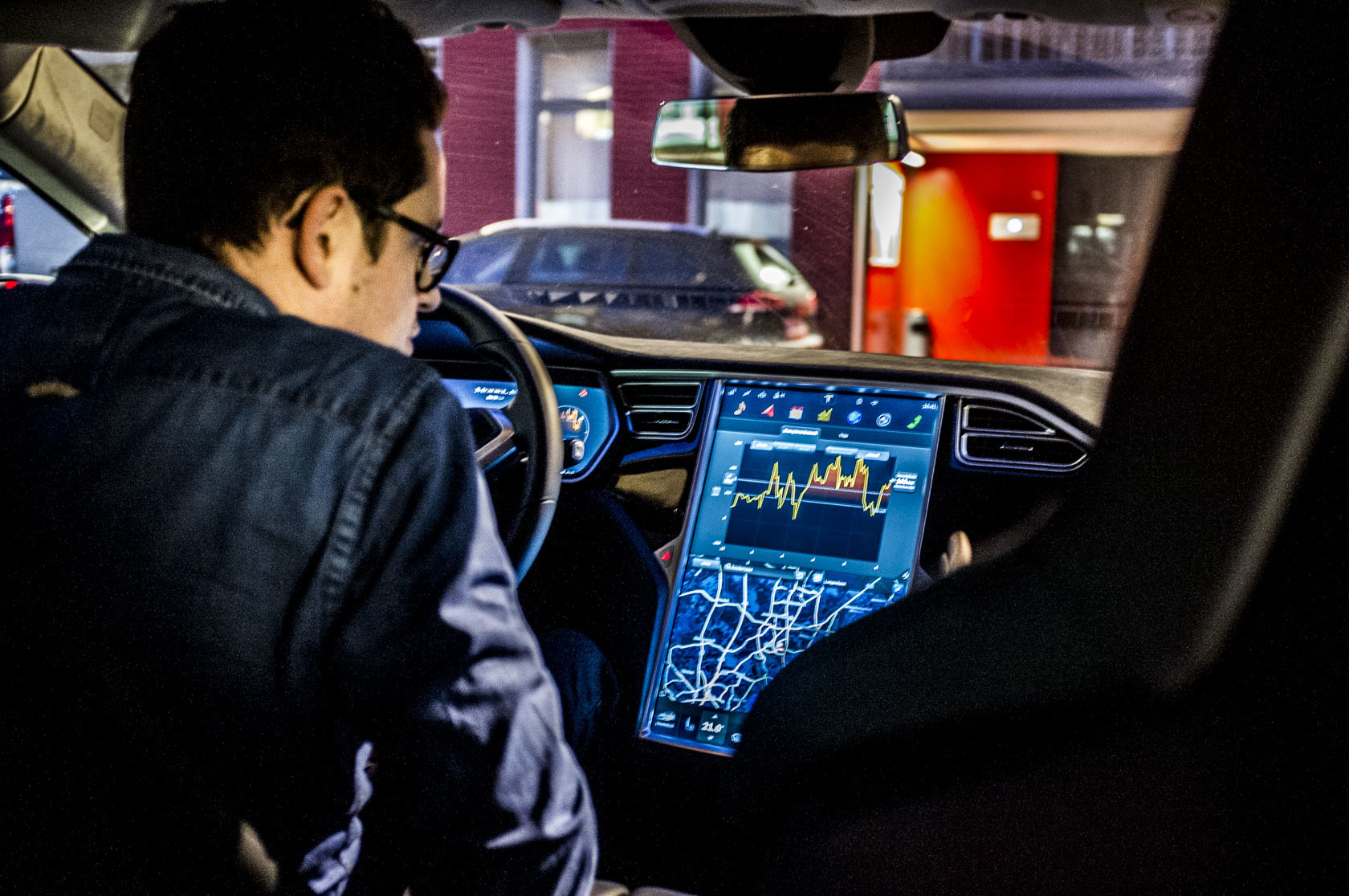
Oversized. The screen. Unfortunately, the interface seems too complicated and outdated.
What we didn't enjoy – although we love big screens – was the 17” monitor that dominated the entire center of the car. Not only did this device seem totally oversized, but the interface also needs an update and complicates access to standard functions. A personalized dashboard could help with that. The simplest and most direct form of interaction is still tactile controls. Dynamizing this tactile form of input could be an exciting interaction approach.
The Conclusion
The return trip to the Hamburg center was spent mostly in stop-and-go traffic – which in a gasoline-powered manual with a hole in the exhaust isn't exactly pleasant – and we philosophized about what we had just experienced.
We agreed: We like electric drive. The acceleration, the silence, the comfort. The much more contemporary approach to a drive. You're no longer sitting in a cassette deck (20-year-old car), or a mini-disc player (current car), but are on the road with Spotify.
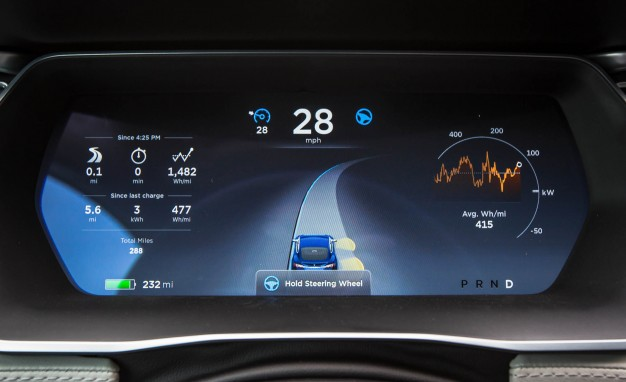
The "dashboard" is pleasantly reduced compared to the giant screen.
What excites us most is that Tesla has taken the step to completely renew and implement the product car in a contemporary way. A Tesla doesn't look like a Prius, and it doesn't feel like one either. That's a good thing. A Model S doesn't want to seem sensible but rather high-quality and sporty. Always very American, broad-shouldered, and confident. Designed for wide roads and large parking spaces. That they should still improve in terms of design – both in the interfaces and the body – is one thing; but at its core, Tesla has recognized that it needs the Joy of Use and thus the emotion from the customer to create desire. No one is talking about sensible, energy-recovery screenshots from the car display. But with an Insane mode, autopilot, or a 007 Easter egg, they are.
Additionally, announcements like free electricity at all Tesla Power Stations provide the final bit of persuasion. Even for us. However, we find the idea of having electric motors in all cars even more appealing. An old body, the comfort of old Swedish Volvo leather car seats, and silent gliding at incredible speed. The contrast between old and new makes it even more appealing. An upgrade kit, so to speak. That would be something.
A small downside would be the price of the Model S: around 100,000 EUR. A bit too much for owners of rusty Ford Fiestas or Volvos. But this has been somewhat mitigated with the release of the Model 3. Starting in 2017, Tesla is focusing fully on quantity and offering the more compact model for the mass market starting at 35,000 USD.