Hitchhiker's Guide to the Metaverse: Answers to the Most Common Questions

The article was first published on W&V
Hardly a day goes by without another Metaverse platform or solution being released. But it's not just the offerings and news that are booming – companies' questions about the new digital and interactive world are also increasing. Our Co-Founder and Managing Partner Alexander El-Meligi has answered the most common ones for W&V:
What exactly is the Metaverse?
The term Metaverse refers to a persistent 3D world where users interact and meet in real-time, sharing common experiences. The difference from traditional websites and social networks lies in the spatial representation and collective live experience that the Metaverse offers. Various activities such as working, shopping, playing, or even traveling are possible there. The term originally comes from the science fiction novel "Snow Crash" by Neal Stephenson from 1992. Fun fact: In the epilogue, he claims that he invented the term Metaverse for the book as a marketing gimmick, just like Avatar.
Isn't the Metaverse from the Meta corporation and only accessible with a VR headset?
Meta CEO Mark Zuckerberg pursues a long-term vision of the Metaverse, which is intended to be an ecosystem used by both end consumers and companies. But he is by no means the only Silicon Valley CEO who sees the future of his company there and drives the topic. There are already numerous Metaverse solutions for completely different devices. Decentraland, for example, is a web-based Metaverse experience, Sandbox a PC app, and Roblox a mobile app as well as a PC application. Thus, the Metaverse should be considered completely device-independent, and in the future, there will be tailor-made Metaverse solutions for various devices.
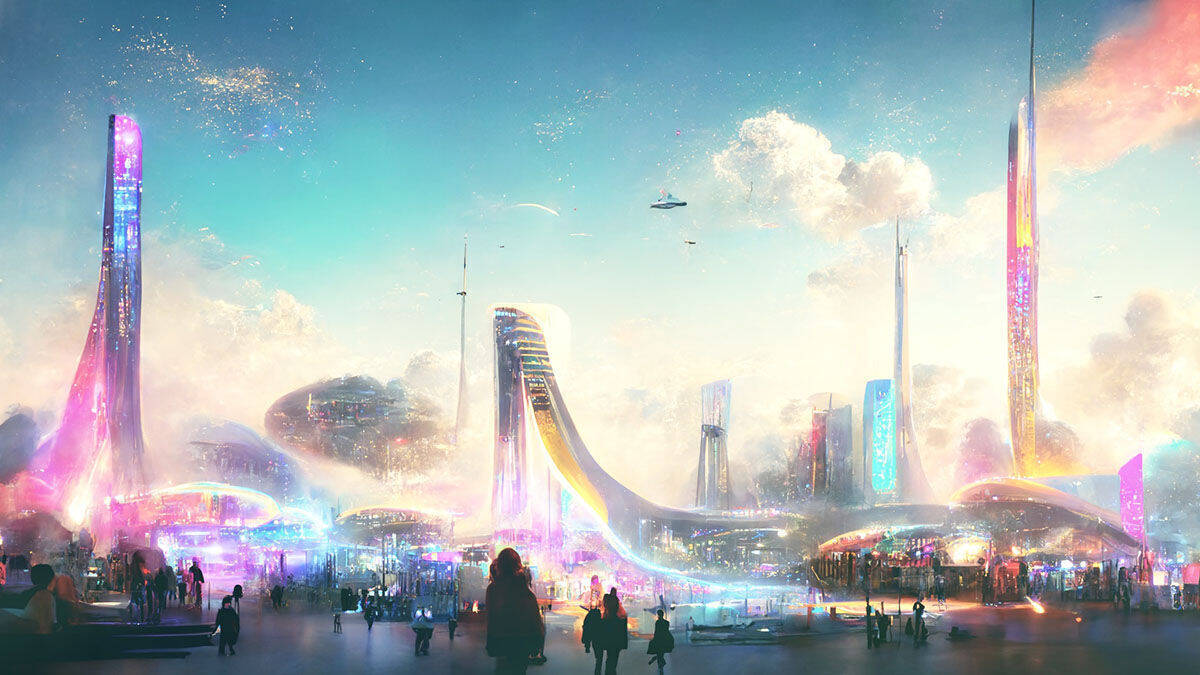
Second Life didn't catch on, so why should the Metaverse succeed?
Technological progress in recent years has been rapid. Many key technologies are now coming together that were partially or entirely missing in the past to achieve similarly disruptive momentum. Today, we are always-on, talking with the smartphone in our pocket, setting up our home with AR, trading blockchain-based cryptocurrencies on the go, working remotely from anywhere most of the week, and playing with our mobile VR headset in the park against users worldwide. This is, of course, just a small excerpt, but it shows how meteoric the development has been – and continues to advance.
Is the Metaverse a digital copy of the real world?
One possible concept is a Metaverse that represents the digital or virtual copy of reality. This requires immense computing power, AI, and data capacities. Additionally, reality must constantly be connected with the virtual environment to achieve this high level of realism. This is often referred to as a "Digital Twin." Today's consumer computers are not yet capable of representing the complexity of the world, but there are already exciting developments and technologies moving in this direction. The game software Unreal Engine achieves very realistic avatars and an enormously detailed environment on current computers. Moreover, there are already initial steps in the industrial sector to map factory facilities and processes as a Digital Twin. Nvidia and Siemens are already working as partners on this vision to optimize products during runtime or remotely monitor and control complex processes.
Will our customers really use and implement this?
When the first social media platforms emerged, the question was: "Why should we appear on these social channels, and how should we make money with them?" Today, these topics are driven by Generation Z and Alpha, who are tech-savvy, do not distinguish between digital and physical assets, and spend a lot of time in 3D worlds. A quick glance into the living room, where the kids are playing Fortnite and spending their pocket money on skins and avatars, confirms this. Therefore, companies are increasingly jumping on this trend. Example: Gucci, with the Gucci Garden (Roblox) or Nike (Sandbox). The variety of different experiences and use cases is gigantic. From catwalks, events, and concerts to learning platforms, co-working, and co-creation spaces.
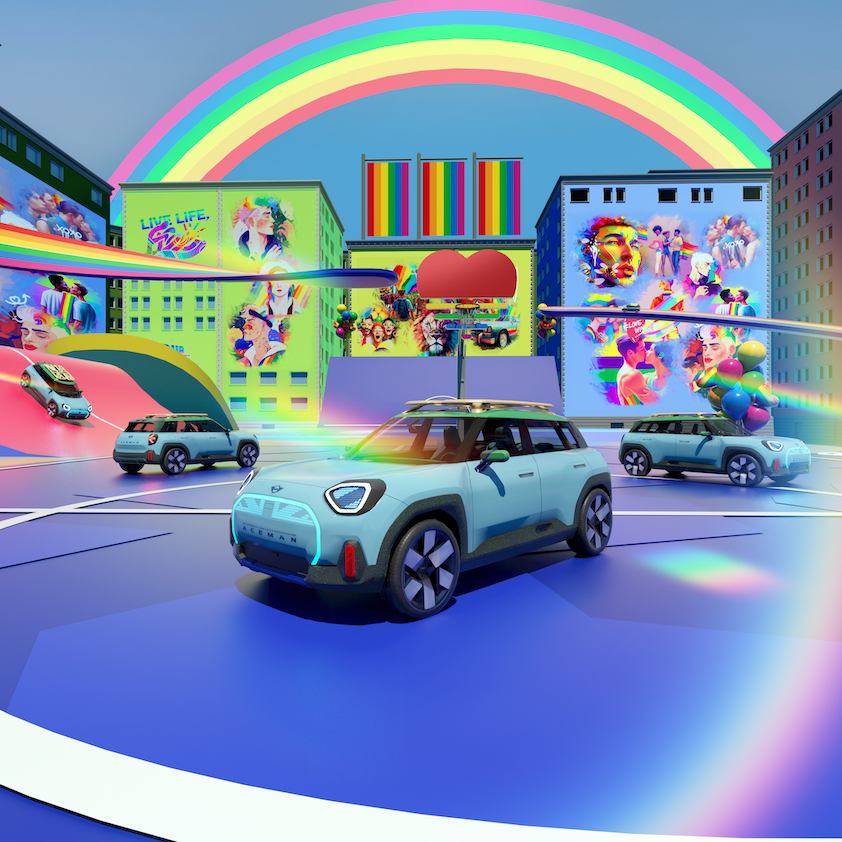
Tailored for GenZ: MINIverse, the first drivable Metaverse by MINI
Isn't the Metaverse just for gamers?
The Metaverse is heavily driven by gaming, which is why games like Fortnite or Minecraft are cited as major Metaverse examples. Gaming has long become a significant part of our society and teaches us from an early age how to navigate digital 3D environments. This, of course, also influences other areas. This is evidenced by examples such as the real estate Metaverse platform Decentraland, Meta's social experience Horizon Worlds, or the training campus Virbela. Additionally, spatial thinking is one of the basic characteristics of human thinking. We are always in a 3D space, can remember places more easily than phone numbers, and know instinctively how to move within them.
How can we integrate our products into the Metaverse?
A Metaverse platform has the great advantage of uniting and connecting brand and product experiences. Product presentations can be showcased live, combined with how-to videos, interviews and panels, workshops, and even games and concerts. Products can not only be integrated but also simulated in a real context – for example, a coffee machine that is not only shown in the kitchen but can also be operated. Or the functions of an aircraft turbine at 10 km altitude. Of course, classic e-commerce features are also possible to enable direct shopping options.
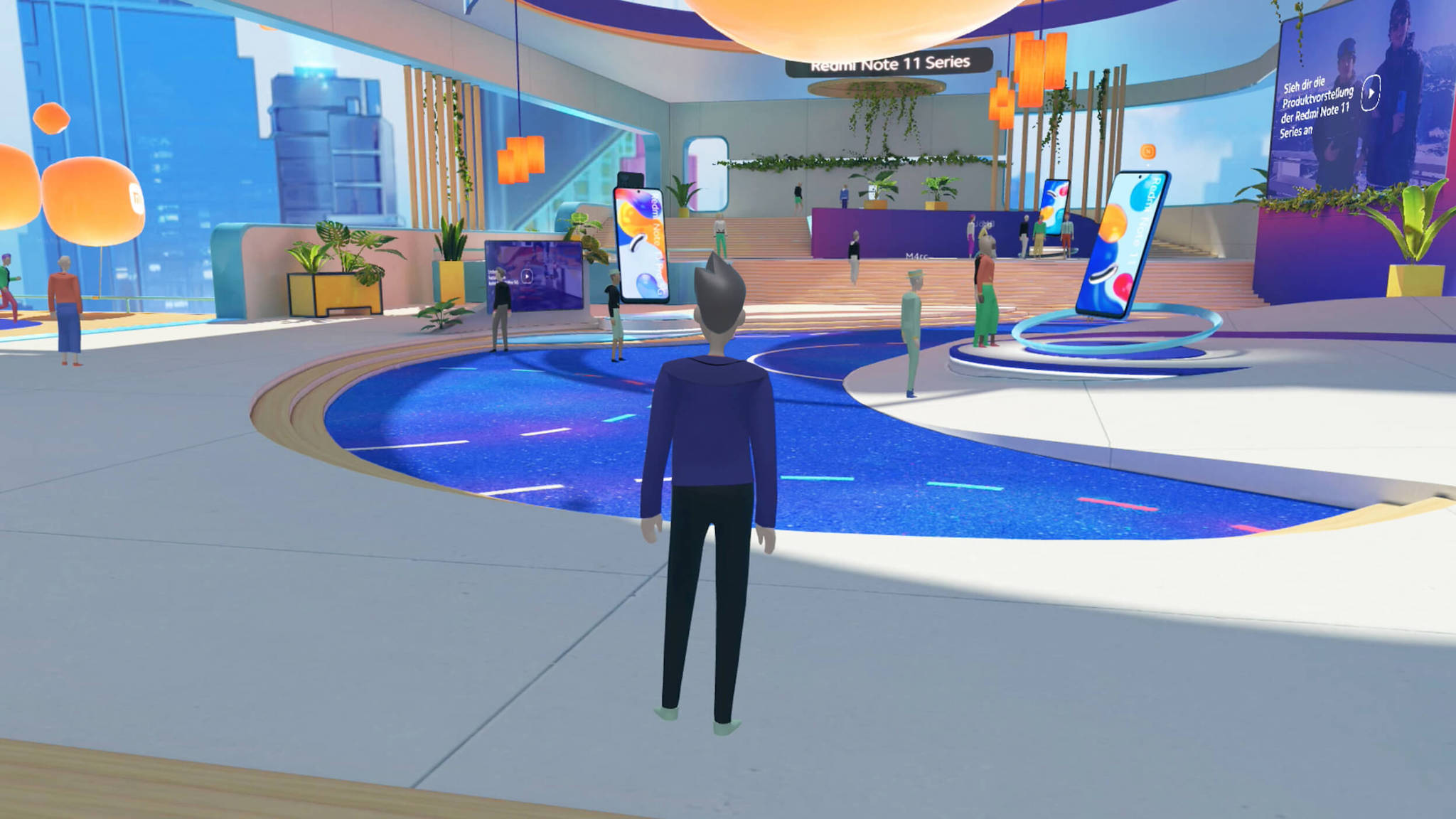
Xiaomi Metaverse Showroom for the launch of the Redmi Note Series 11 on the German market.
Can we even afford this?
An entry point could be to start with an already existing Metaverse to gather initial learnings and test features. Many platforms like Decentraland or Sandbox offer smaller spaces. Prices range from 5,000 to 15,000 euros per space (excluding content production). The risk is that the chosen Metaverse platform may not exist long-term or that your target audience is not active there. Then there is the development of your own corporate Metaverse. Since this means a permanent and long-term development, goals and features should be carefully planned to assess the scope and costs of the solution. The larger the 3D space and the more features, the more complex the entire production is. Developments start at around 200,000 euros. Additionally, there are monthly maintenance costs such as server costs, which depend on traffic. The higher the number of users, the higher the monthly costs.
The Metaverse spaces I've visited were quite empty. How can we do better?
Many factors play a role here: the platform, marketing, user experience, and strategy. Many customers want to build a huge platform but do not plan adequately. Sustainable technical and editorial support, as well as marketing, are essential. Therefore, it is advisable to have a long-term strategy for resource and budget planning to cover all necessary measures. Additionally, a dedicated team should operate the platform and provide regular incentives for users to visit.