My First Time: Snapchat
, Demodern

We live in an exciting, fast-paced time where our lives are consistently overwhelmed by the advancing digitalization time and again. Whether at work or in leisure. New devices and apps seem to appear hourly, often offering a disruptive substitute for everyday "challenges" such as communication, dating, transport, or even distraction.
Sometimes, however, the apps and platforms are not disruptive at all. They also have no discernible added value. Nevertheless, usage and popularity skyrocket to realms beyond good and evil, making you feel like your pants might burst just by watching.
Be that as it may. Now that the German market is celebrating Snapchat after the big Instagram hype, it's probably high time to engage with the subject.
Similar to the American app Yo, I initially filed Snapchat in the "I'll look at it someday" drawer. Another startup product that causes a stir with a quick rise, timely monetization (through data or ads), and subsequent sale to an American media giant, I thought. Time to face the truth.
After a brief round of questions within the team, it turns out that while everyone is indeed represented on common platforms like Twitter, Facebook, Instagram, and Pinterest - Snapchat is absolute new territory for the (clear) majority. No matter, brave as I am, I downloaded the app and off we go. It's quickly clear what it's all about. Namely, oneself (assuming active use). In times of selfies, duckfaces, and the newly created profession of digital influencer, it's not particularly surprising. So is Snapchat as a video/photo messaging app just another stage for self-presentation and staging? Or simply a successful reaction to the current content shift from text + image to video?
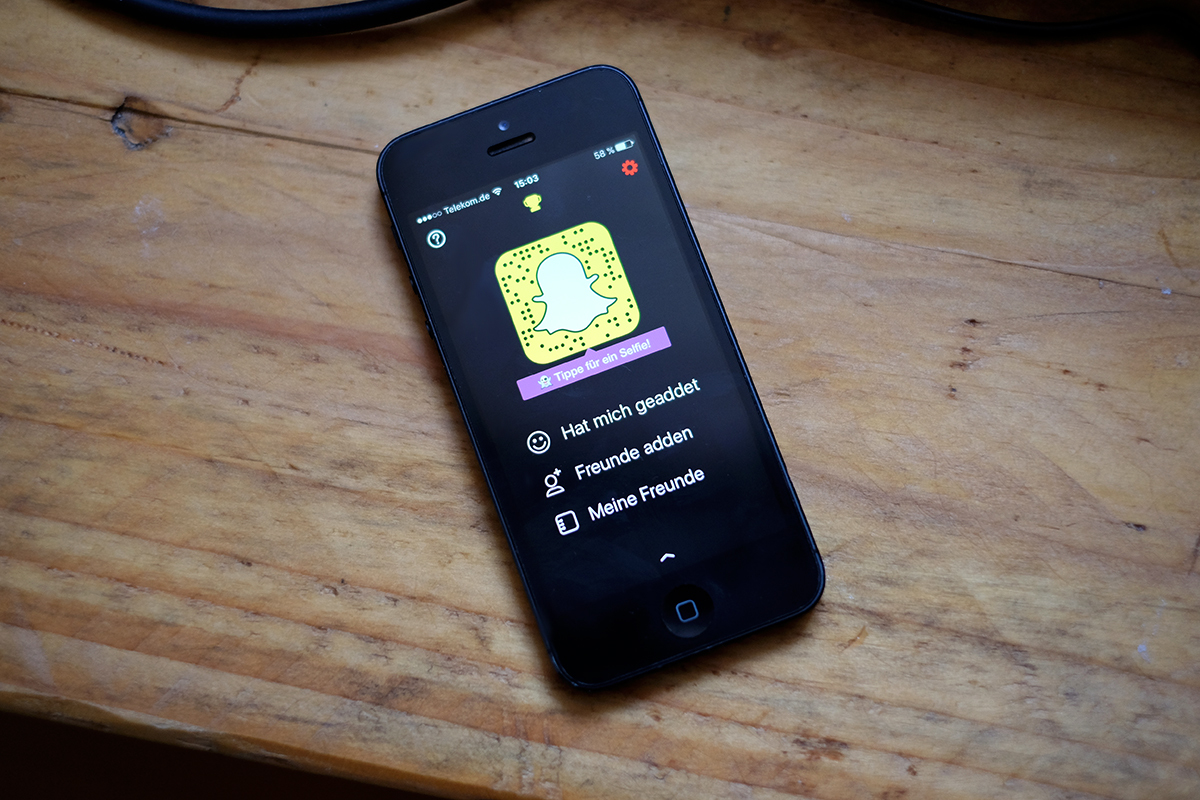
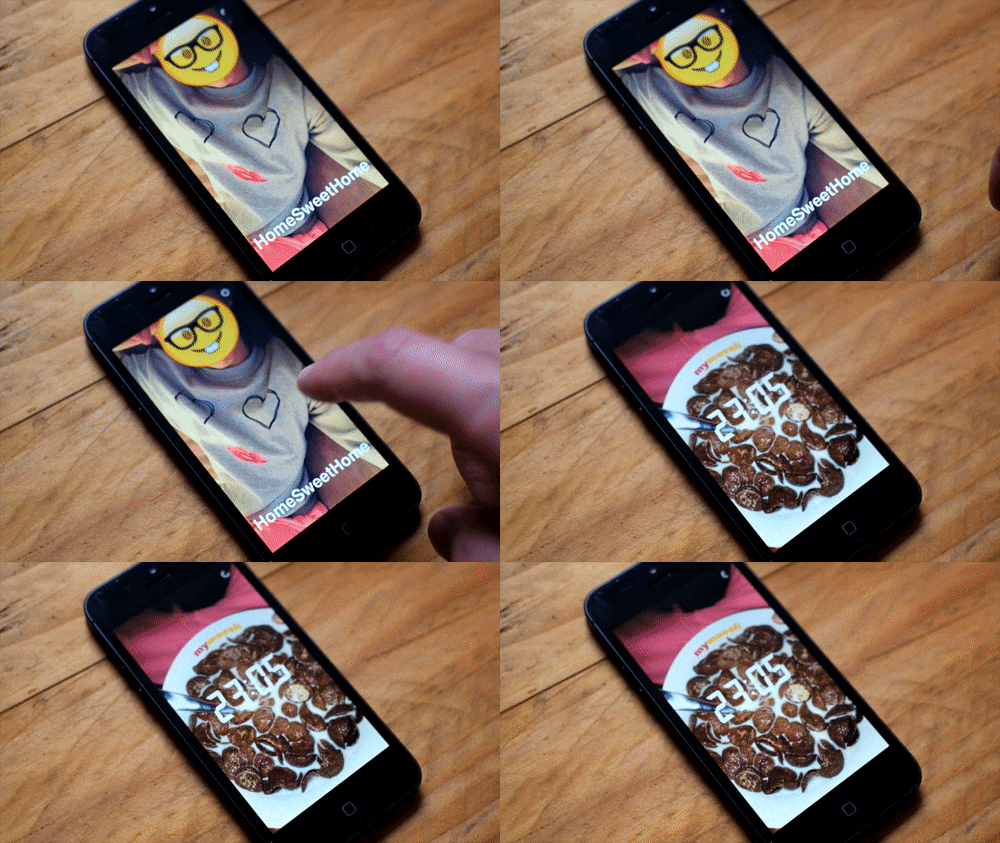
Snapchat allows you to record short videos (or photos) on the screen using the Tap & Hold function. Very intuitively, quickly, and consecutively. This way, you can share your daily routine in just a few steps with individual or multiple selected users privately or directly with all followers. Alternatively, you can slap one of the many face-recognition filters on your face. (My personal highlight, as it will turn out later.)
Sounds logical, but also somehow like Instagram. Almost, because the so-called "Story" is only available for a maximum of 24 hours and then automatically expires. And that's the trick. Because of this alone, the meticulously staged and Kinfolk-worthy arrangement of coffee on an old wooden table next to an exotic potted plant and Swedish designer scarf loses significance.
Snapchat is the little rebellious punk brother of the insecure, horn-rimmed glasses-wearing architecture-studying sister. More untamed, naive, and somehow more honest. Or the honest, but often too realistic buddy who slaps you in the face with a flat hand when you're dreaming too much and brings you back to reality. So, finally a platform that doesn't allow post-production weapons like soft focus and stamps. Bare-hands in your face! This, by the way, leads to users of the same or similar social strata watching each other more. Manus manum lavat. Snaps from stars and celebrities are not as popular compared to Instagram, as current statistics show. The lived lifestyle seems too far away and untouchable.
As a scientific passive consumer, I initially add the "Who's Who" of the digital Snapchat clique to my contact list and watch the stories every evening. For 7 days. That's the plan. Like on Instagram, two main user groups can be identified. Hobby users and (semi-commercial) bloggers (well, and celebrities). So roughly those who simply share everyday experiences at school, work, or parties, and those who skillfully incorporate their tangible digital lifestyle, including all sponsored event trips and free products, as native ads into the videos - yet somehow still pass as ordinary mortals.
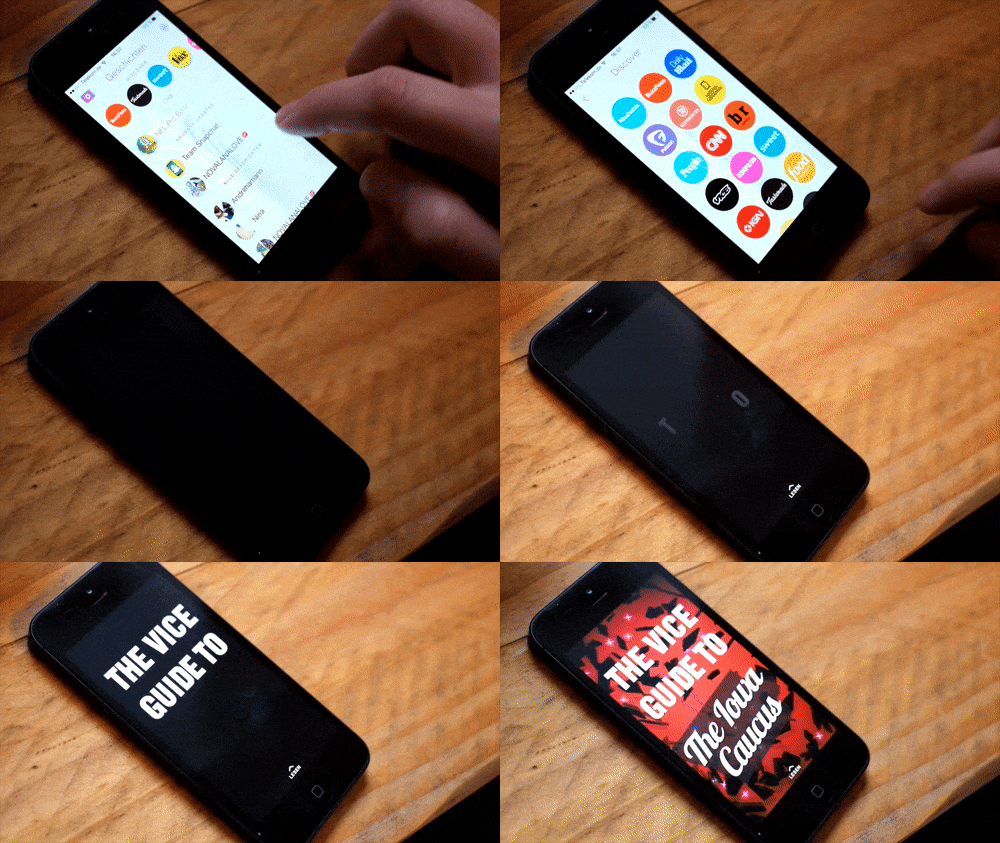
Additionally, there is a core of currently 17 companies, including VICE, National Geographic, and Buzzfeed, providing stories in the form of articles (with videos or photos) for users. Like an e-book, you can explore the respective content by swiping and scrolling. For certain events (NBA games, NFL ProBowl, presidential campaigns, Shark Week, etc.), the live function is added, allowing users to explore Snapchat as a real-time channel.
With a female share of 70%, the topics are limited according to the stereotypical grid. Shopping, selfies, Starbucks. Not quite my thing, even though I now know that Starbucks branches are considered a postmodern hotspot for young girls. True to the motto: It can always get worse, I randomly observe two girls one evening sitting opposite each other in a restaurant and snapping about their food at the same time. What else? "I'm eating a Caesar's Salad right now. Mmmh, and you?" Mmmh, exactly. Probably vegan and without chicken. I feel like I'm in the hell of underage narcissistic profile neurotics. A mental one-way street with no turning possibility. Maybe behind my facade hides an old-conservative grumbler who simply can't do anything with the blow-out of meaningless everyday situations. (It's a Caesar's Salad...?!)
In the following days, I'm unfortunately not surprised. Instead, I slowly start to worry about the interest horizon of some people and those who will become one. The more stories I watch, the more certain I am that consumption and materialism not only serve to satisfy one's own needs but rather fall into the category of social desirability. While High5-Gina* snaps almost daily from higher-priced restaurants, NovaLamaLove* goes to the hairdresser or eyelash extension treatment every few days. Hair on fleek and so on. And in the middle, my little cousin, who apparently has repurposed the smartphone as a mirror to emulate her idols. Wow.
After a week of consistent "Snapchat & Chill" evenings, several things have become clear to me. The app almost passed me by for a reason. Despite the enormous sum of 100 million daily active users and 6 billion views per day - the app is more popular with younger generations. Perhaps because the need to communicate is many times higher among younger people. Perhaps also because the behavior and handling of social media by millennials (digital natives) are entirely different from the behavior of those who consider dial-up modems and WinRar as relics from the times of Napoleon and Robespierre (young digitals). For whatever reasons - there is a certain gap that separates the "mature" Facebook generation from the young Snapchat generation.
To bridge the gap towards corporate communications: With the mass of new social messaging apps that are randomly (or not) washed into our feeds every day, you can quickly lose track. And possibly to the detriment of your own business.
In my eyes, Snapchat, as an extension of communication channels, represents an option for interactive storytelling from which the user experience could also benefit. In times of steadily increasing online consumption and declining retail sales, it is important to offer consumers added value and experiences. Offline as well as online. Be it through account takeovers, insights, or exclusive content - with the help of dynamic content and creative stories, at least online, exactly there could be a connection. Companies like McDonald's, Taco Bell, but also Calvin Klein and Audi have already discovered Snapchat as an additional communication channel and completed successful campaigns.
Unfortunately, things are relatively slow here. However, I could imagine - no, even wish for - more activity/campaigns from lifestyle brands, for example. As a contrast to the current monotony and especially because there is currently hardly any competition on the platform. The magic word is - as so often - to do. Don't calculate everything to death, but grab the bull by the horns and ride it. Maybe then I would also use Snapchat as a valid alternative to the previous platforms of product communication - provided there is still some time left between selfies and follow-me-around.
* Usernames altered