Micro Amusement Parks: Innovative Experience Communication
, Demodern

Put on the VR headset, start the application, and the visitor of the Frankfurt Senckenberg Museum is virtually right in the middle of an aquarium. However, around them swim not underwater creatures from today, but prehistoric dinosaurs.
In a tropical Jurassic sea, the visitor experiences, for example, the birth of an ichthyosaur – of course, purely virtually. To captivate the user and simultaneously address them with relevant content, more and more companies are now relying on installations, interactive 3D games, multi-level AR and VR experiences, mixed reality worlds, or touch tables.
The focus is less on home entertainment for individual users with VR headsets or 360° content. Instead, on-site experiences at trade shows, events, cultural institutions, or at the point of sale are the focus. They combine innovative technology and entertainment and become an unforgettable event through novel and playful interaction.
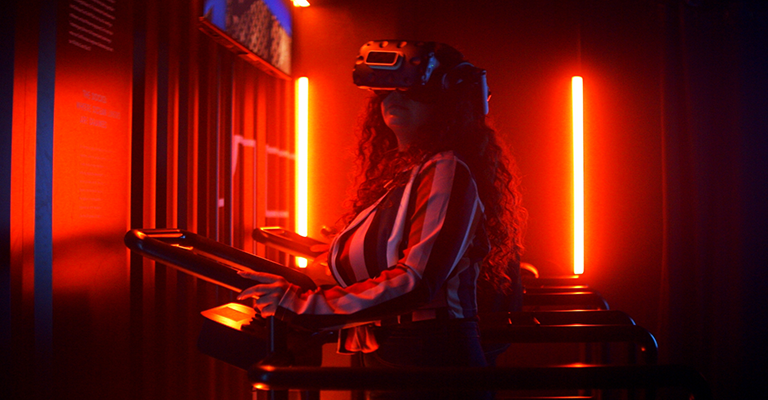
Image: Virtual Reality Experience at the Discovery Dock in Hamburg
Entertaining Edu- and Infotainment
The sequence of attractions into a kind of 'mini amusement park' – so-called 'Micro Amusement Parks' – primarily aims at entertaining guests and evokes childlike enthusiasm. Thus, it is mainly about fun entertainment, but not exclusively: Micro Amusement Parks are also suitable for conveying valuable and educational content. Didactic or informative content does not feel like a tutorial or textbook, but like an experience. Crucial to success is combining storytelling and gamification so that the user perceives a story as entertaining and dynamic, with the content organically fitting into it. For example, thanks to playful elements, the user takes on an active role, interacts with the story, or controls the events.
Red Thread and Self-Explanatory Technology
For individual AR/VR applications to become a series of comprehensive experiences and thus a Micro Amusement Park, a conceptual and technical overall strategy is needed, essentially a red thread. A concept based on this serves as a guide for all trades in the project – from scenography, UX design, storytelling to programming and developing software.
However, the underlying technology must not become an end in itself. Instead, it should be self-explanatory and accessible, so it does not become a barrier for the user or distract too much from the content and story.
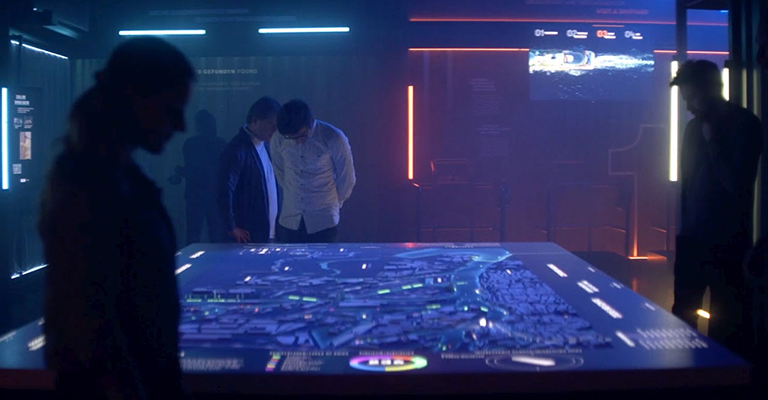
Image: Interactive harbor model with real-time data at the Discovery Dock in Hamburg
Whether Museum or City Marketing: Versatile Experience Moments
Wherever an extraordinary brand experience can be designed in addition to purely factual or static information and products, it is worthwhile for companies and brands to consider Micro Amusement Parks as a marketing and live communication measure.
Especially for trade shows and in live communication – even in the B2B sector – these parks are particularly suitable. Because in today's world, people are often somewhat desensitized to 'standard content' due to the multitude of digital messages and channels, which they can also consume at home.
When someone decides to visit a trade show, they want to be inspired by the various exhibitors. Whether educational or playful. This enthusiasm is evoked on the one hand by personal contact with the booth staff and on the other hand by physical, interactive installations at the trade show booths. And a brand that a visitor associates with an exciting, unique experience is more likely to be remembered than interchangeable giveaways at inconspicuous trade show booths.
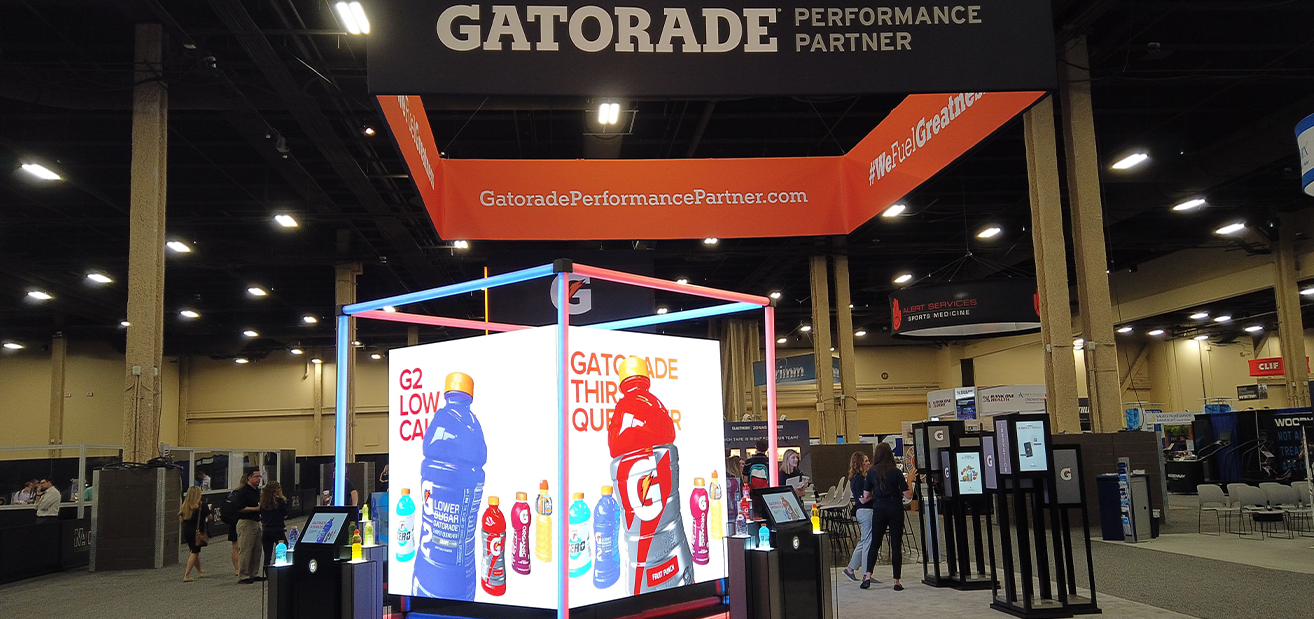
Image: Gatorade booth at the NATA in Las Vegas
Micro Amusement Parks are also interesting and relevant for cultural institutions like museums. But not only there: especially the tourism segment and city marketing benefit from the advantages of Micro Amusement Parks, as an example from Swedish Lapland clearly shows: An expanding iron ore mine forces part of the Arctic small town of Gällivare-Malmberget to relocate completely. A costly project that takes almost two decades. To share the plans for the relocation in advance with the public and gather their feedback, a Swedish consulting firm developed a virtually walkable model of the city. In a visually appealing way, citizens learn how their city will look in the future and can engage in the urban planning discussion.
With a series of interactive mixed reality applications, historical or tourist sites and attractions also become an experience. This happened at the Discovery Dock by DuMont, a completely new interactive permanent exhibition in the Port of Hamburg, visited daily by hundreds of visitors from around the world.
The Discovery Dock offers a behind-the-scenes look at the world of the Port of Hamburg and conveys the diversity of the Port of Hamburg in a playful way and with the latest virtual reality technology on an experience path.
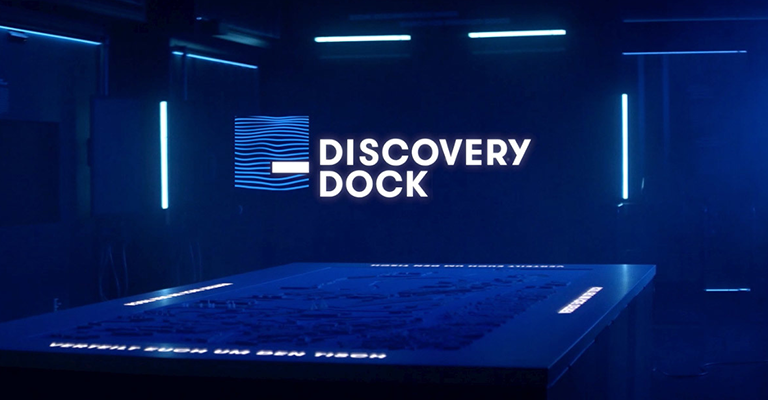
Image: Insight into the Discovery Dock in Hamburg
Monetized Micro Amusement
However, Micro Amusement Parks are not only suitable as a marketing measure but also as a sales channel: By providing part or individual exhibits of the Micro Amusement Parks on virtual reality platforms and stores (e.g., in the Steam or Oculus Store), companies can monetize Micro Amusement Parks – or parts of them. Especially museums or retail benefit from this, as they enable a virtual visit or a virtual showroom for the masses and completely independent of location.
In this case, the experiences are no longer location-bound – as is generally the case with Micro Amusement Parks. The goal is to generate attention and visibility through a sneak peek into the Micro Amusement Park and to inspire. Ideally, this attracts the user to the actual location of the applications, such as the museum itself or the physical retail store.
And that's where the trend is heading: The combination of a location-bound Micro Amusement Park and individual applications also usable at home holds great potential for companies in many industries. It remains exciting and hopefully eventful.
Source: Lead Digital - Article by Alexander El-Meligi - Managing Partner and Creative Director at Demodern Creative Technologies