SCRUM MASTER Workshop - My Thoughts on It
, Demodern

In September, my wonderful project management colleague Laura and I attended a SCRUM Master Certificate Workshop in Cologne. I've been interested in agile project management approaches for a while. Accordingly, I was eager to dive into the depths of SCRUM and its roles during the workshop.
The first big plus: Sohrab Salimi and Reza Farhang are very relaxed, experienced, and competent moderators. Also quite funny - definitely not to be overlooked in a two-day workshop. The group was a colorful mix of people from different professional backgrounds. I was surprised - most participants did not have an agency background. Essentially, we were the only ones. I hadn't expected that. A pretty cool coincidence, as it turned out. Since the Cologne agency scene is small and cozy, we all know each other well and constantly meet in bars, we are always at least somewhat on the same planet. There's nothing wrong with that. However, discussing your workflow with people from Mars when you live on the Moon is quite refreshing and can shed a different light on things.
So far so good, no further details. Just briefly and concisely the most important thoughts after the workshop. Often, it only becomes clear after a few weeks what really stuck:
SCRUM means a big pile of rules
Contrary to the general "feeling" towards agile methods, agile project management always primarily means very good planning and following a lot of rules.
Yes, that's certainly nothing new for some. But what if you don't work in a company that makes all decisions two years in advance? When not every day is the same and project plans can't always be the top priority? And shouldn't be. What if the workplace is more of a creative playground - and that's exactly how it's intended to be? Rules are cool, essentially I love rules. They make many things so much easier. So I always move in a field of tension between creative work and the inner urge for structure. A conscious decision, by the way. All the more, it was not the goal of the workshop for me to memorize a thick rulebook.
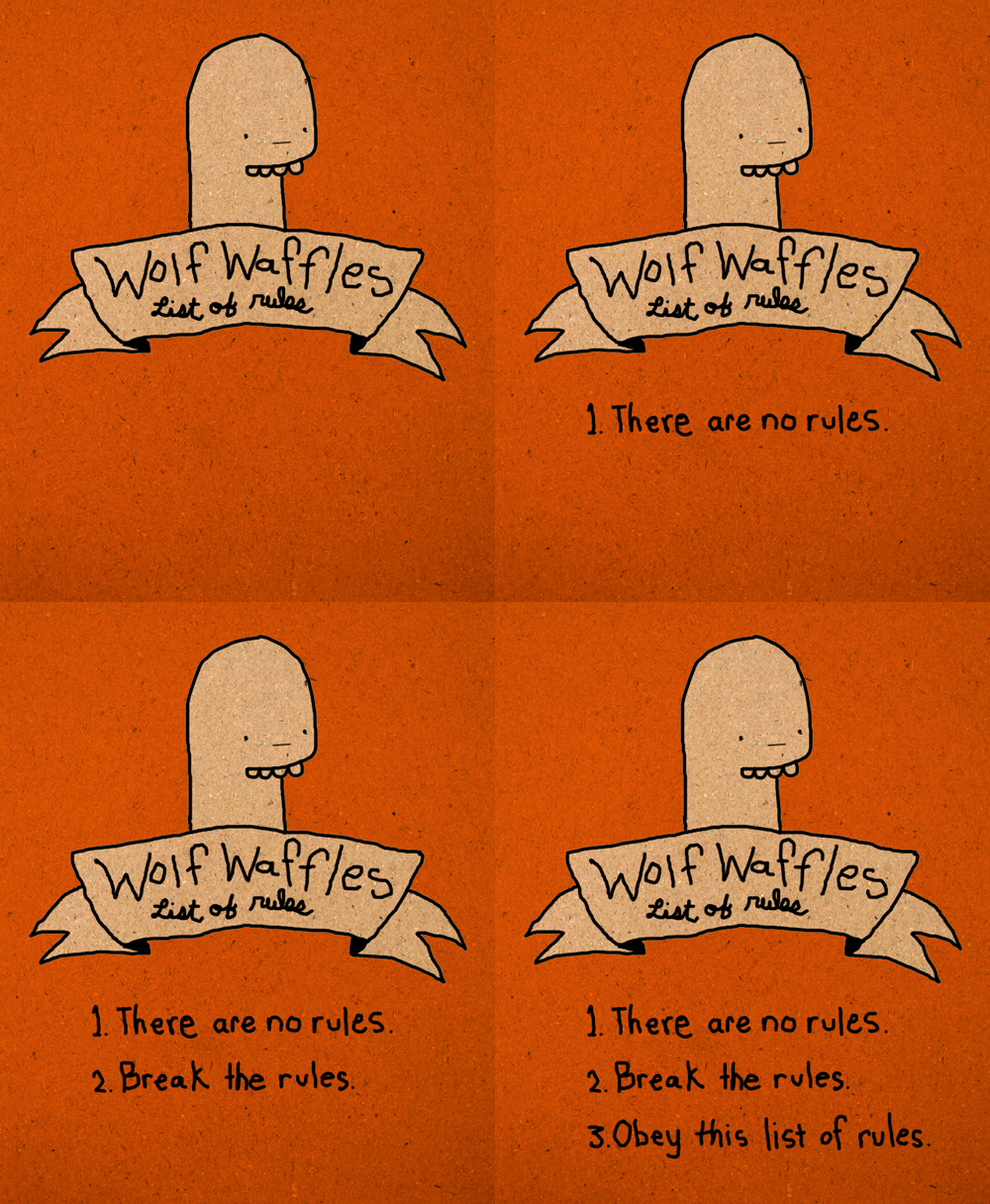
The good news: if you don't take it too strictly, SCRUM is what you make of it. If you're the structure nerd in a smart, creative team, focus on keeping the focus high. You're the guy who raises the umbrella in the air during the city tour. As long as everyone has understood the big idea, you're on the right track. You're following a common goal, and that's all that matters. Then you just have to harness this energy.
It takes a team
Those who work in an agency often deal with more than one project at a time. Basically no problem. We know this multitasking and know what to do to ensure everything happens at the right time. As long as everyone is on the same boat, it runs smoothly. But what if the team doesn't go on the journey together?

If each client, each project, is managed by a different team constellation? Maybe even within a project, the team changes? Yes, somehow it works. But all that briefing, onboarding, and handing over work statuses means unnecessary work. In every new team constellation, people have to get to know and understand each other and the big picture - over and over again. Sounds exhausting? It is.
Agile working is really more meaningful in a stable team.
We tried it, and yes, we love it. A few months ago, we restructured to harness this energy and call our teams the "Squads". The best part: when each team starts to develop its own identity and pursue individual goals. That's when the fun really begins.
Make agreements
No really - make agreements. Don't just say it, do it. Write them down, place them visibly in the room for the whole team, follow them. Each team has its own structure. So start with what is supposedly "obvious". And you'll notice that most of it isn't actually "obvious".

Everyone in the team fulfills their role. What information do they normally need to work on a job? And: What does it mean for them when they say "I'm done"? Once these two seemingly simple questions are clarified, all the other points that should also be discussed will already be openly on the table. Once these agreements are made, they are a great asset for the team. Mutual understanding grows, as does cooperative working. The path to the goal is then only a matter of workflow and good organization.
How to make agreements
Not everyone in the team is a sharp and extroverted speaker who confidently presents their opinion? Luckily. A homogeneous team of born leaders - sounds difficult. Some will be heard earlier than others. Because they are louder, or faster, or their presence is enormous. That's okay, it's nice that our qualities are different.

A simple way to give everyone the same voice: Make "Fist of Five" decisions when it is really important. What initially feels silly works. Simply use your hands to show how much you really agree with something, on a scale from zero to five. Five is a loud yes, zero is a loud no. And in between... is probably clear.
This thing with the workflow…
There was something else.
Here, every team, but also every project and every project manager is different. Do you really need Sprint Planning, strictly according to SCRUM? For every project? Always? Well. And when more than one project is on the agenda, it becomes even more difficult. Not exactly the pure SCRUM school... Maybe that's the moment to put the SCRUM bible aside and get creative when circumstances require it.
Sometimes it's difficult to find out what works for a team. But to be honest: that's the job. No one else will find this answer. Actually, I particularly like this part of my work. There's no recipe for the perfect workflow.
Do you love tickets? Write tickets. Do you have the best overview with emails? Send emails. Do you read Excel spreadsheets like other people read Marvel comics? Go for it. Do you prefer juggling Post-Its? Maybe a good idea for others too. There's really only one rule: No matter what tool, it won't talk to the guys and gals in your team for you.
For our team, a hybrid strategy works. We love tickets to organize ourselves and document decisions. But a weekly, analog Post-It SCRUM Board keeps in front of us what is on the table. And: There's no better conversation accelerator. That's the state today - but hey: we evolve, our tools evolve with us. Maybe it will look different again next month.
In conclusion…
A quick look back says: heard much of it before. Yes, but the workshop was a great discussion starter in the team. A great opportunity to reflect and see what others are up to. Everyone does their own thing differently, but the goal is always similar.
And why SCRUM? It's all about learning - that's the best part.
Imposing a structure on someone and expecting something to come out of it? Not a good idea. SCRUM is about finding things out.
Find out how this tool works. Find a way to bring order to chaos. Find a really attractive and intuitive design element for this tricky requirement. Find the right words to share your vision and develop this cool product you envision. Find out where you can improve. And so on.
Sounds like a playground? Sounds like us :)