The Storytelling Crisis
, Hannah Johnson

Author: Hannah Johnson, Director of Interactive Storytelling at Demodern
Most of those reading this have likely grown up digitally. They have witnessed the transition from laptops to smartphones and the birth and boom of social media platforms like Facebook, Instagram, and Snapchat. Interacting with specific content and deciding what we ultimately want to consume has become as simple as playing a game. Decisions are made with a "tap" or a "swipe." Statistics show how this sabotages our attention: In 2000, something could capture (and hold) our attention for an average of 12 seconds, but by 2015, this was only possible for three seconds. According to expert opinions, our attention span is already shorter than that of a goldfish.
But actually, the supposed loss of attention span is a myth.
Let's look at Netflix: The average Netflix customer spends ten hours per week on the platform. A story that was once told in an hour and a half is now expanded through a dramaturgy that stretches over countless hours. Characters, plots, and storylines have become increasingly complex, and we immerse ourselves in them. In 2015, "binge-watching" was the word of the year in the Collins English Dictionary. In the same year, it was also claimed that we had evolved into the goldfish generation.
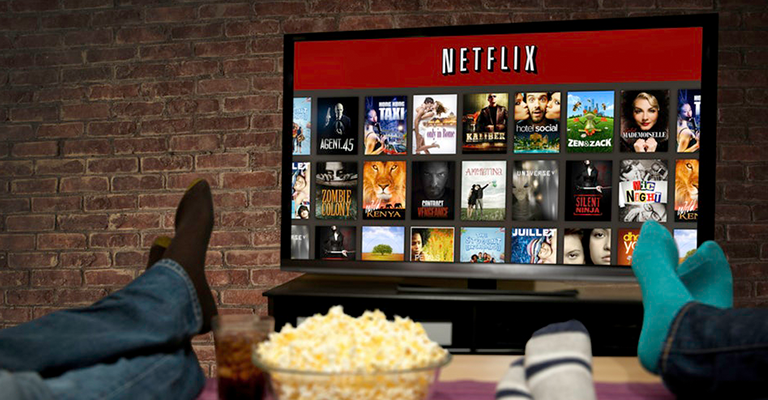
Image source: ©Netflix
What some call a loss of attention span is actually a loss of good storytelling. The loss of awareness of what truly matters. In a British survey of schoolchildren, almost two-thirds said they wouldn't mind if social media had never been invented. In the same survey, however, they also admitted that features like Snapchat Stories were their favorites. Similarly, the gaming industry is booming. By 2021, 2.7 billion players are expected worldwide. The most popular AAA games involve the consumer. They are in the middle of the story, moving as an agent within the action. The complex plot and exciting stories occupy the player for up to a thousand hours.
But we crave stories not only online; offline, our hunger for them is greater than ever. Traditional business sectors, however, seem unable to fill this gap easily. Worldwide, the number of museum visits is declining. A report noted a 19.5% decrease in art gallery visitors in the US alone. It seems tiring when museums focus more on the curator than the visitor. Content feels distant, as it seems to revolve only around sales. Meanwhile, we expect more from storytelling than simply reading the fine print on a plaque next to the actual image. Which is good.
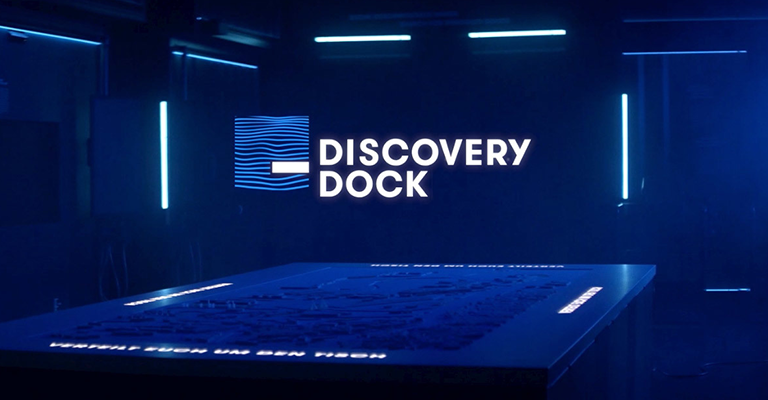
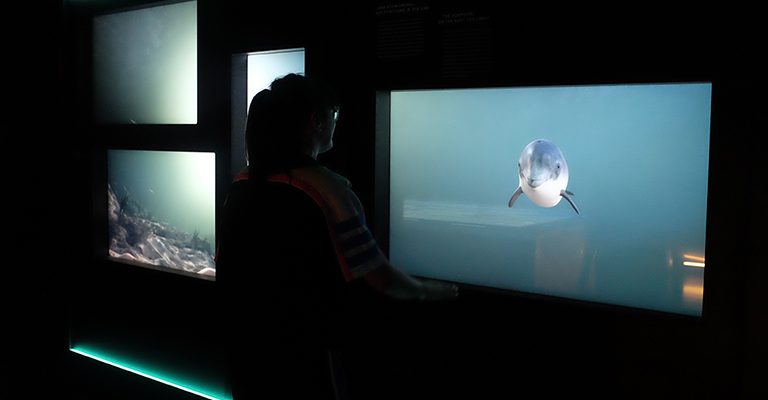
Instead, new, radical alternatives are emerging. Alternatives that are not only user-centered but also story-centered. For the Discovery Dock, an experience we recently developed for the Dumont Media Group, technology is the anchor for a more meaningful, immersive storytelling experience. Virtual Reality and projection mapping provide deeper insights into the stories and places within a harbor world that one normally has no access to. At the individual stations of the exhibition, the visitor directs the story themselves and is not just an observer.
At Discovery Dock, it was also clear where the trend is heading: The most popular exhibits are the most story-rich, interactive, and immersive. Mixed-reality simulations for unloading containers or visiting a dry dock with a dock worker top the list. In a subsequent survey, 95% of visitors said they would recommend the experience to a friend.
Whether gaming, social media, or location-based entertainment, it is in human nature to constantly seek new experiences. The incorporation of stories and new forms of storytelling will be the main distinguishing feature for those who want to satisfy the global hunger for meaning. And our society needs that more than ever.