Virtual Reality in B2B – When Business Becomes an Experience
, Demodern

Experiences remain in memory and evoke emotions – this applies to all areas of life and explains the triumph of Virtual Reality. The enormous potential of this technology is now being discovered by more and more B2B decision-makers. When the use of VR is worthwhile for companies and how ZEISS and Dräger use the technology at trade show booths.
When customers are allowed to explore and experience their next travel destination, their future family car, or their dream home in advance, the product feels more real, understandable, and often more desirable. Why should it be any different for the salesperson at the trade show? VR allows people to immerse themselves in the brand world and be captivated in a short time – both privately and in business.
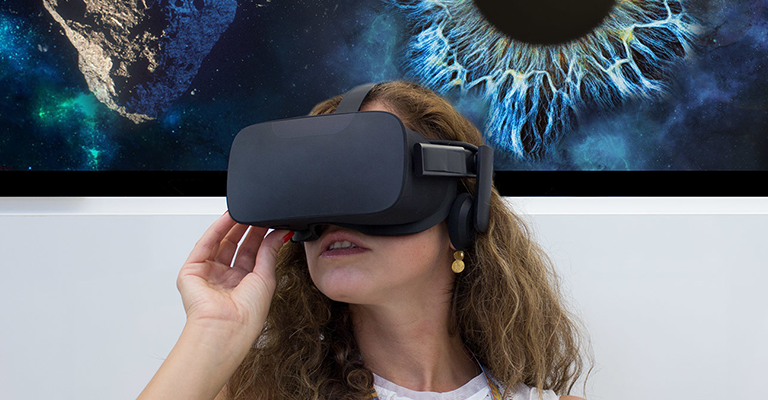
It is clear that companies and brands that focus on strong product presentation and spatial representation particularly benefit from VR technology. Virtual 3D worlds and spaces are used to visualize products, configure them, and simulate application scenarios. This allows companies to make large machines tangible for users without having the expensive equipment actually on-site. During the virtual tour, employees can immerse themselves in the 3D world with the user and extensively explain and demonstrate the product. The scenarios can be adapted to the customer's needs, enabling an individual and convincing brand experience.
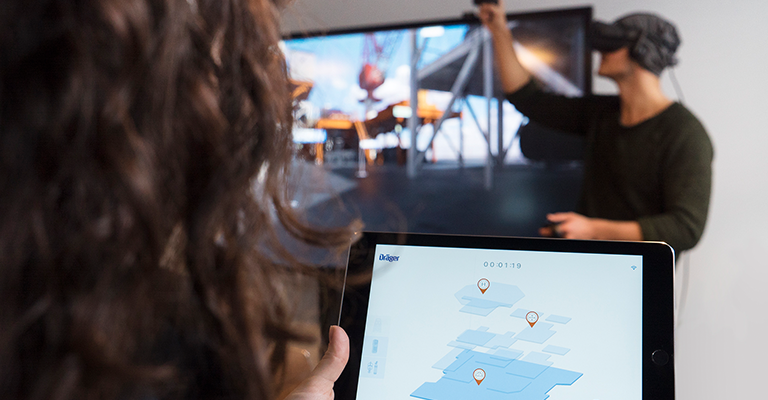
But VR is also suitable for internal company use: In production processes, e-learning, training, and personnel development, the technology can be of great benefit. In addition to visualizing locations, it allows for the simulation of desired situations. This can save travel costs and implement a vivid visualization with the help of Multiuser VR for several people simultaneously – even in different locations.
The Trade Show Booth as a Gateway to the Brand World
One area that particularly benefits from the advance of technology is the trade show. VR revolutionizes company presentations at the booth and expands the on-site offerings at will. Whether extensive product ranges, illustrating work processes, or playfully immersing into the brand world – visitors can experience and explore what companies have to offer beyond the trade show booth.
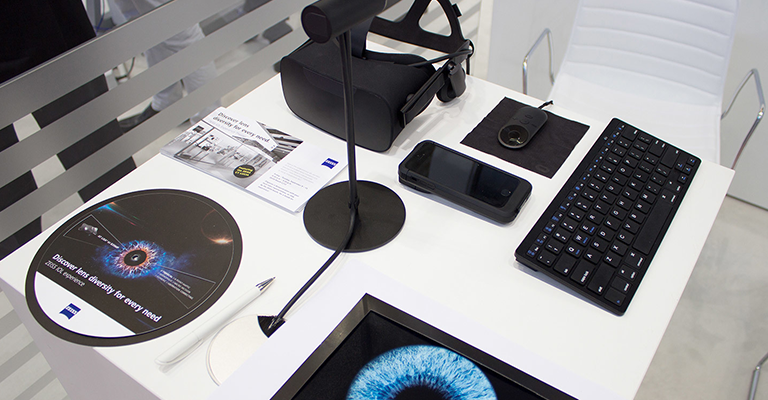
An example: At a medical trade show in Copenhagen, a Virtual Reality application at the ZEISS booth enabled an immersive journey into the universe of the precision mechanics and optics industry. A combination of visual worlds and playful elements allowed visitors – primarily doctors – to easily discover the company's product portfolio. And how better to illustrate this in the case of Zeiss than in the human eye? During a six-minute discovery tour, visitors could experience and use ZEISS products.
James Bond Feeling at the Trade Show
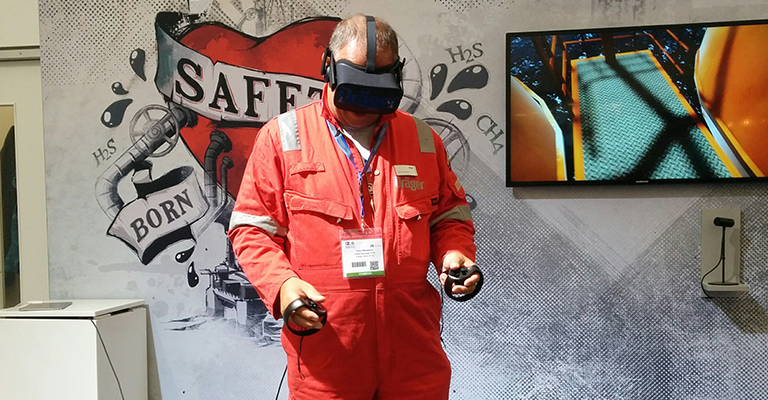
Dräger, the internationally leading company in high-quality medical and safety technology, also uses a VR application to stage its product world playfully and realistically. In the “Offshore Rig VR-Experience,” the user immerses in an oil rig scenario and encounters a simulated emergency from which they can escape thanks to Dräger warning systems. The VR application is primarily used at international trade shows and events. Trade visitors, customers, and buyers from the B2B segment experience the products interactively and are simultaneously made aware of the necessity of safety devices and emergency warning systems. This Real Time VR-Experience demonstrates that VR is a serious technology that serves the playful transfer of knowledge and explanation of complex products – even in the B2B sector. Moreover, the user's attention is 100 percent focused on the brand – a fact that other media can only dream of.
In conclusion, Virtual Reality is now almost universally accessible and versatile due to the achieved technical possibilities. Although this technology has not yet been fully disseminated, companies and brands have not yet fully exploited its potential. However, it is clear that Virtual Reality scores points in the B2B sector due to its immersiveness, especially compared to other current display applications, and has a significant impact on various industries and sectors – and will increasingly do so. We assume that the already established Virtual Reality technology will find a permanent place in various areas in the coming years.
Kristian is the owner, Managing Partner & Creative Director of Demodern and wrote this article as a guest author for marconomy.de.
Here is the article:
Virtual Reality in B2B - marconomy.de
Virtual Reality in B2B - maschinenmarkt.de
Virtual Reality in B2B - industry-of-things.de