Of Buttons and Keys
, Demodern

As a designer and interface addict, one naturally looks with curiosity at the operating concepts of new toys from colleagues in music production and sound design. Who are the rock stars of the scene, and which Davids are positioning themselves with new ideas for tools and processes against the Goliaths of the industry?
The musician wants to play and experiment. And a playfully created mistake often becomes a significant aspect of the end product. Therefore, successful tools always offer a balance between a critical mass of complexity and a low entry threshold that promises manageability. Or in other words, I only use a tool if it's fun and I can improve in small noticeable steps, leading to impressive results. Mastering a skill is deeply rooted in the culture as a driver of personal development and self-expression. Few things are more boring than pure perfection in music, but the pursuit of it creates the tension that lets you feel a bit of the magic that made the greats great.
A clear trend has been emerging for some time: tools are evolving away from the large all-in-one workstation that combines all functions into specialized, manageable, monothematic tools and modules that can shine and impress in their specific discipline. However, one must not lose sight of the use cases. On one side, there's the sound tinkerer in the studio, who still solders live and values every variance in sound synthesis, versus the singer-songwriter who just wants to quickly record a sketch of their idea on the tour bus to capture the moment. Certainly two different requirements for the respective devices.
Toys
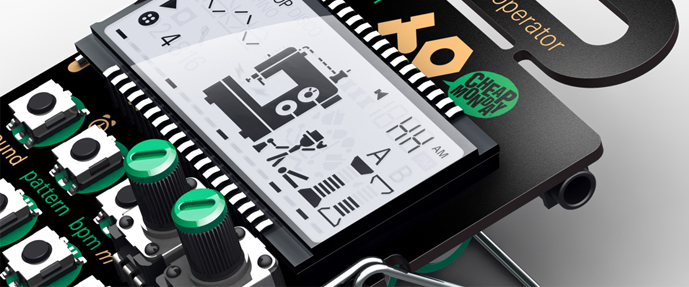
A small company from Sweden named Teenage Engineering, which admittedly already won me over with the OP-1, has now released the Pocket Operator, three instruments for the pocket that somehow look like a mix between a bare calculator and a mousetrap. They come in three variants: rhythm (beats), sub (basslines), and factory (melody). And with their 23 buttons and 2 rotary knobs, they look like a lot of fun. The operation is done through a quirky type of illustration reminiscent of old LCD games. For those who like, there's also something to dress them up, noticeably citing the look of the typical Braun calculator.
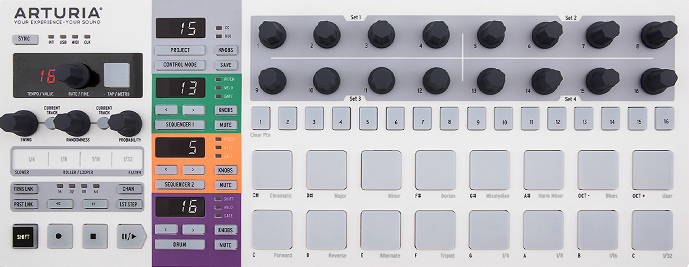
The Arturia BeatStep Pro sequencer is aimed – not only – at users of analog vintage synths and tone generators. Its clear layout allows functional groups to be grasped at first glance. Visually, it is a mix of Revox tape machine and Akai MPC. This strictness paired with the playfulness of this open platform makes tactile engagement with the music a sensory act. The desire to touch is probably also the reason for the trend of returning to wired devices, which not only feel more stable in live use. The French have recorded a small video for clarification.
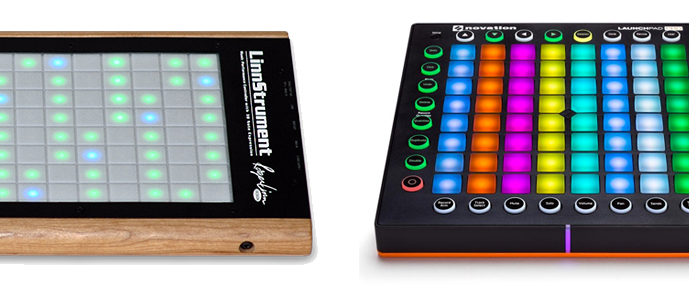
With the LinnStrument by legendary electronics pioneer Roger Linn and the Novation Launch Pad Pro, there are two new representatives of a type of instrument that attempt to explore new ways of handling samples and tones. While the form of the classic keyboard was due to the technical conditions of sound generation, these examples break away from the familiar arrangement and change the available options situationally. The influence on the alteration of the generated signal is also exploited and requires some practice to truly control the parameters. And somehow, one thinks back to the times of an Atari Hotz Box.
Mobile Production
In the "behind glass" category, there is a lot happening. And it seems that AudioBus is establishing itself as the standard for app communication. Among the many releases, three candidates stand out. The Wavemachine Labs Auria Pro, the Akai iMPC Pro, and the Waldorf Attack drum synth.
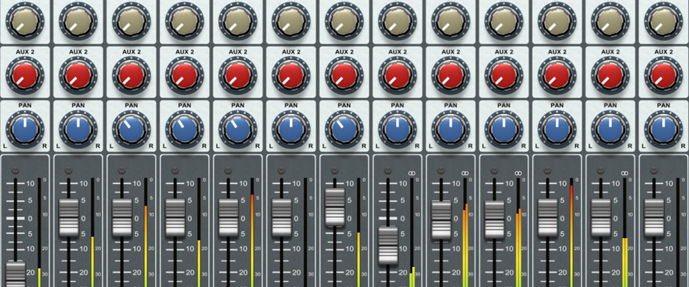
Even if skeuomorphism in interface design is not the latest trend, the Auria interface appears well-structured and usable. And as a 48-track recorder, the iPad becomes a real production alternative. The editing and mastering functions are tailored to professional users familiar with studio workflows. However, the app exclusively offers the ability to work with audio tracks. For a touch application, the interface uses relatively few new approaches to gesture control and is oriented towards the operating paradigms of its large desktop siblings.
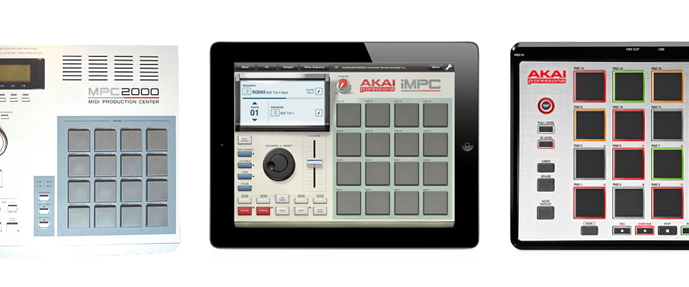
The iMPC Pro inherits a great legacy. The original MPC (Music Production Center, 1988) was THE mobile production studio and set standards with its clear, indestructible interface for a generation of musicians. The iMPC takes noticeable visual cues without appearing too naturalistic. The paradigms and design language are well interpreted, and with the MPC Element, there is even a tactile controller that revives the old rubber pad feeling. Direct sampling and the creation of pad banks are disproportionately more comfortable than with the original LCD display and the severely limited sample memory.
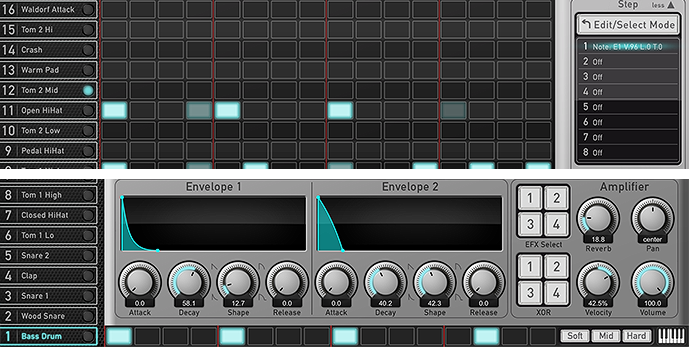
The Attack plugin from Waldorf set standards with sound quality and editing capabilities. Now this product has made it to the iPad. The look of the interface is undeniably old school or "so 2000." However, this is probably to be read as a homage to the original plugin from 2001. The operation is fun, though. Each instrument is located on the left edge and can be edited in sound mode and played in pattern mode. Practical, if not very pretty, is the handling of the created patterns in song mode. Here you can playfully assemble an arrangement from your created patterns. As a bonus, there is a phrase vocoder that rhythmically chops up speech or vocal recordings.
Analog Behemoths
In addition to virtual instruments, there is also a flood of new real analog synths that, as mentioned at the beginning, focus entirely on their core: creating great, real sounds. The difference between digital and analog lies in the synthesis, while digital synthesis has to simulate all vibrations and overtones, in analog synthesis, the tones are created by oscillating circuits that can be influenced and altered by various filters to ultimately set the speaker in motion. This leads to significantly warmer, more intense sound colors, with a wide spectrum of resonances and self-induced interferences, in short, more lively sounds. These gems come with a variety of rotary and sliding pots that invite experimentation and play.
The beauty is that each instrument has its own character and peculiarities in operation. This character is also fortunately reflected in the departure from plastic. Wood, aluminum, and rubber are used again, as befits a proper musical instrument.
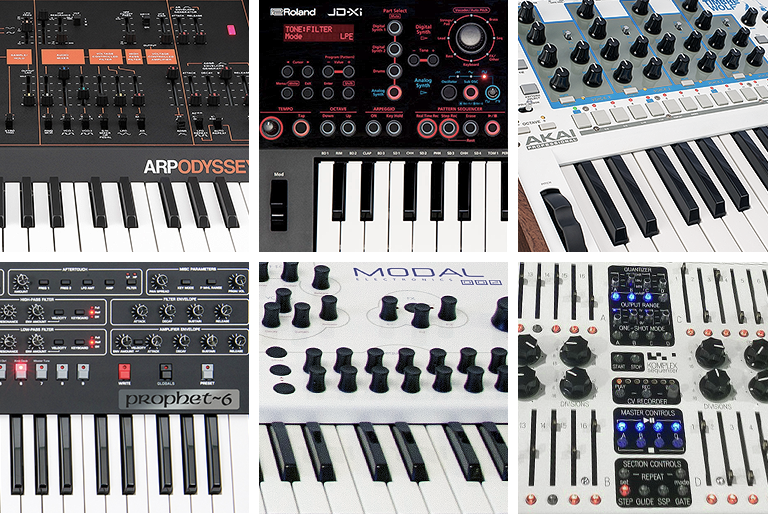
A selection of this growing genre includes the reissue of the legendary Korg ARP Odyssey, the digital-analog Roland JD-Xi, the beautiful Akai Pro Timbre Wolf, the dream of every electrical engineer, the Dave Smith Instruments Prophet 6, the extraterrestrial Modal Electronics 002, and the monster Koma Elektronik Komplex. It's worth diving into the sound examples on the respective pages.
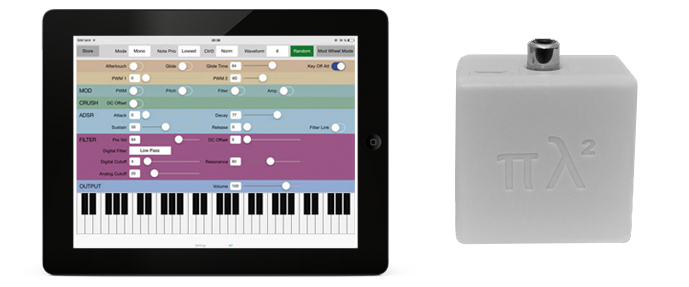
The hipster among the synths: The Ploytec πλ² Leukos Micro-Synth. Not much larger than a matchbox and yet a fully-fledged digital-analog synthesizer with an iPad editor. Overall very austere, but perhaps this struggle is what makes it appealing to engage with this piece.
The tool determines the path. And it has a significant influence on the creation process of a production. It remains to be seen which of these concepts will actually resonate with the discerning clientele of composers and producers. Perhaps we'll hear more from one or the other soon.
A small tip: Avid has released the entry-level version "Pro Tools First" of their quasi-industry standard Pro Tools, which is used in all renowned recording studios, for free. Just give it a try: http://apps.avid.com/ProToolsFirst/