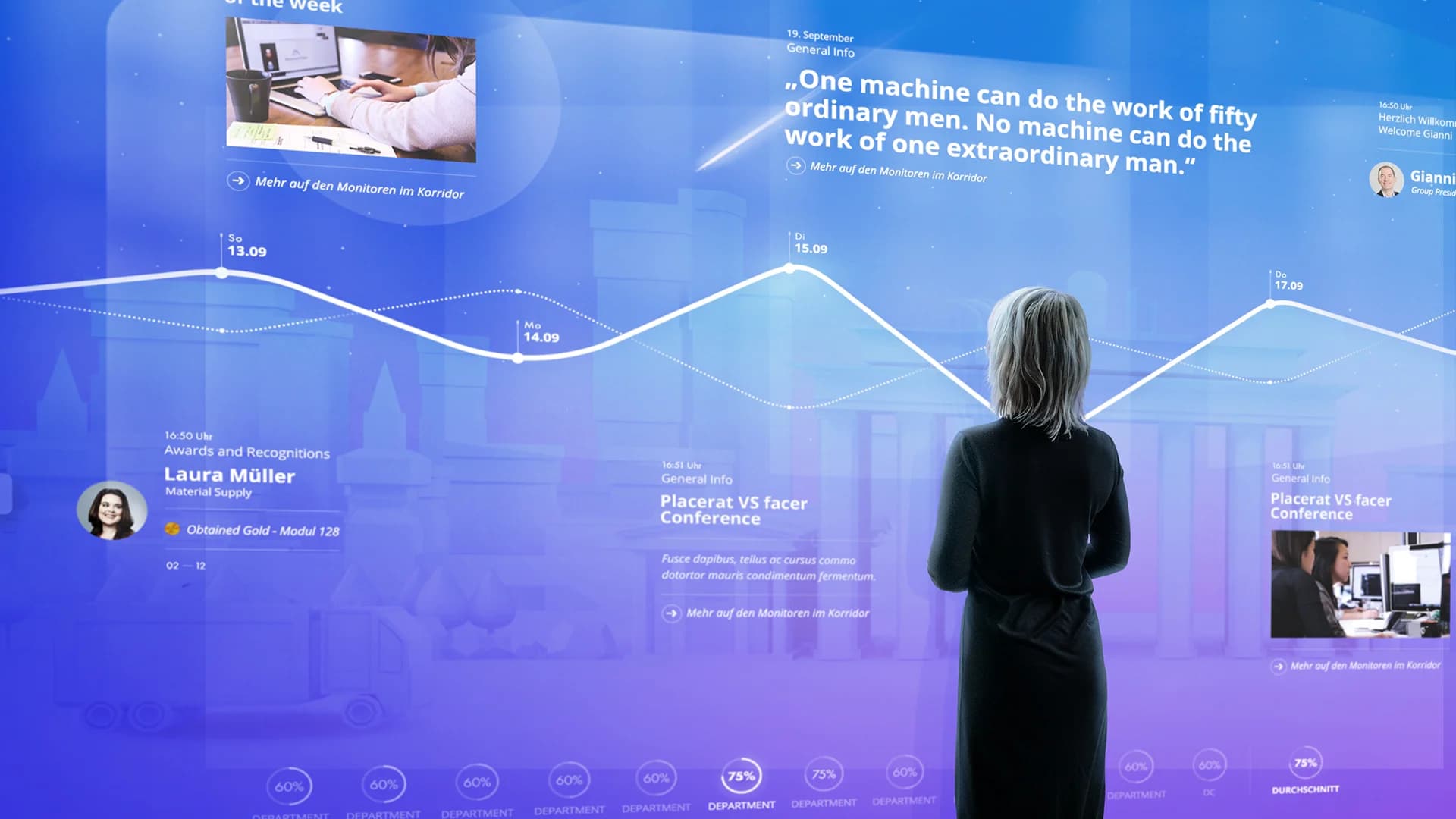
With the Demodern Infowall, employees and visitors at P&G in Euskirchen will now be informed about the latest company news in the entrance area.
Client
Procter & Gamble
Industry
Consumer Goods
Solution
Interactive Installation
Technology
3D / WebGLTouch / Sensor
Services
Technical ConsultingUX DesignVisual DesignSoftware DevelopmentDevOpsProducing

The P&G Infowall transforms the foyer into a digital communication center.
One glance, all relevant information.
The foyer of the P&G Development Center in Euskirchen becomes the new information hub: a 15 m² Infowall welcomes visitors and provides employees with current, contextual news as they pass by, making the traditional bulletin board obsolete.
P&G needed a solution that directly welcomes visitors and provides employees with relevant information daily. The goal was to increase visibility and currency, reduce manual maintenance, and create clear information areas for different target groups.
Making communication more visible and up-to-date.
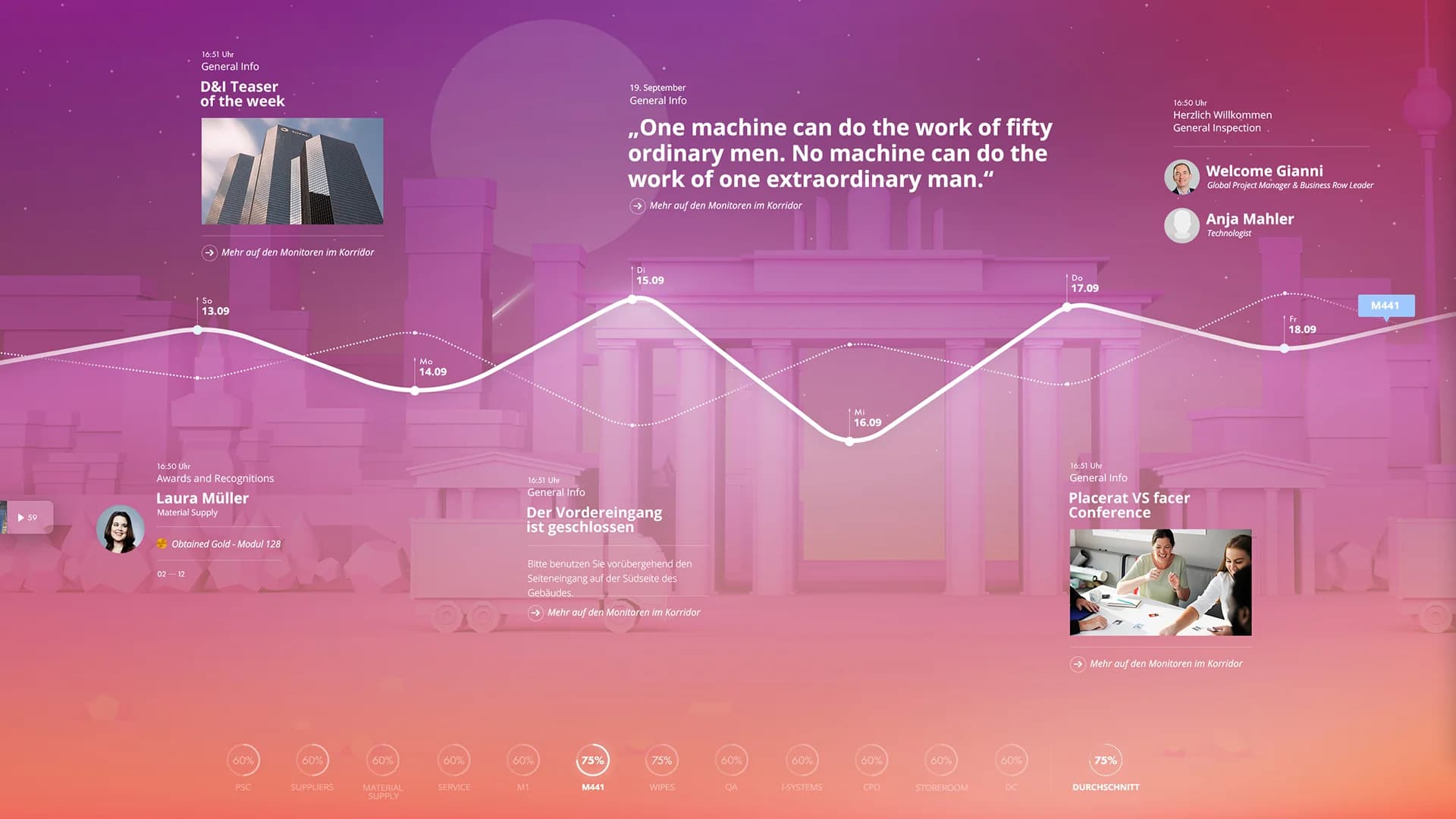
A 15 m² dynamic wall that welcomes visitors and delivers context-sensitive information to employees, complemented by changing 3D worlds and situational visualizations such as weather and time of day.
Automated content, clear roles, and scalable reach.
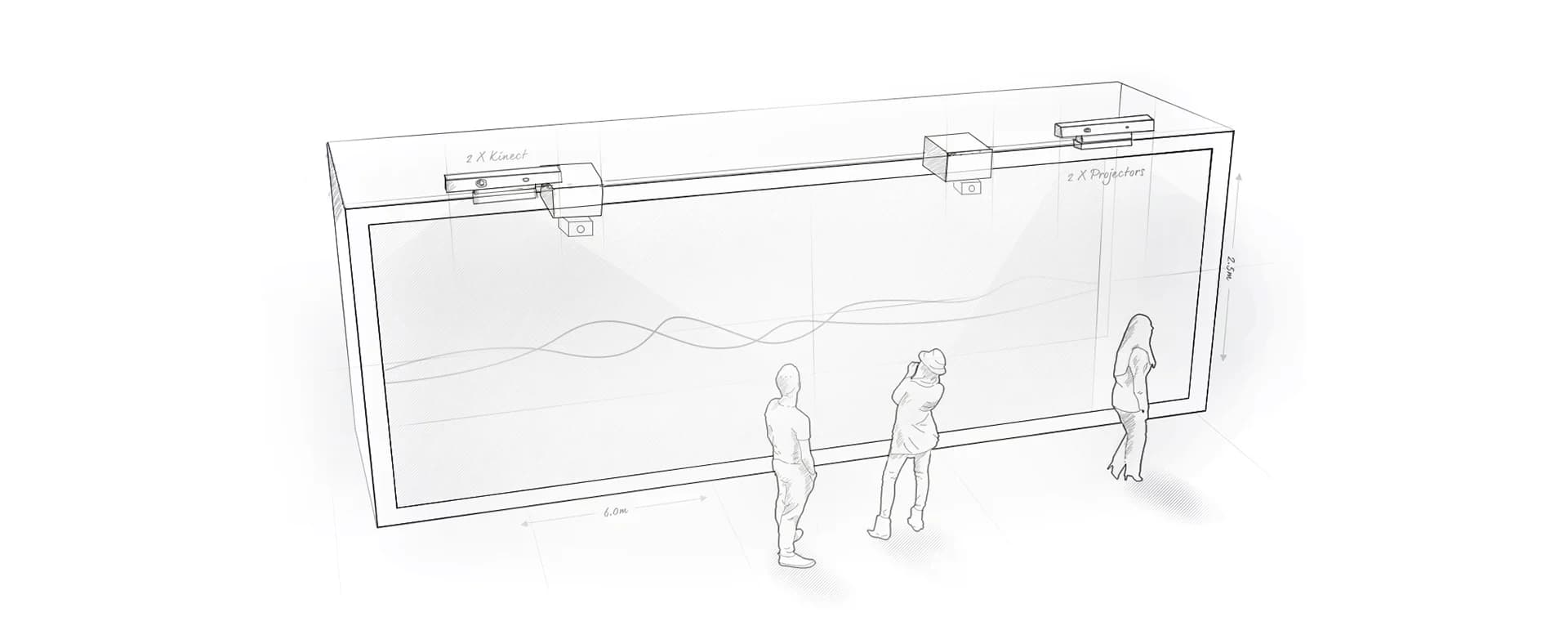
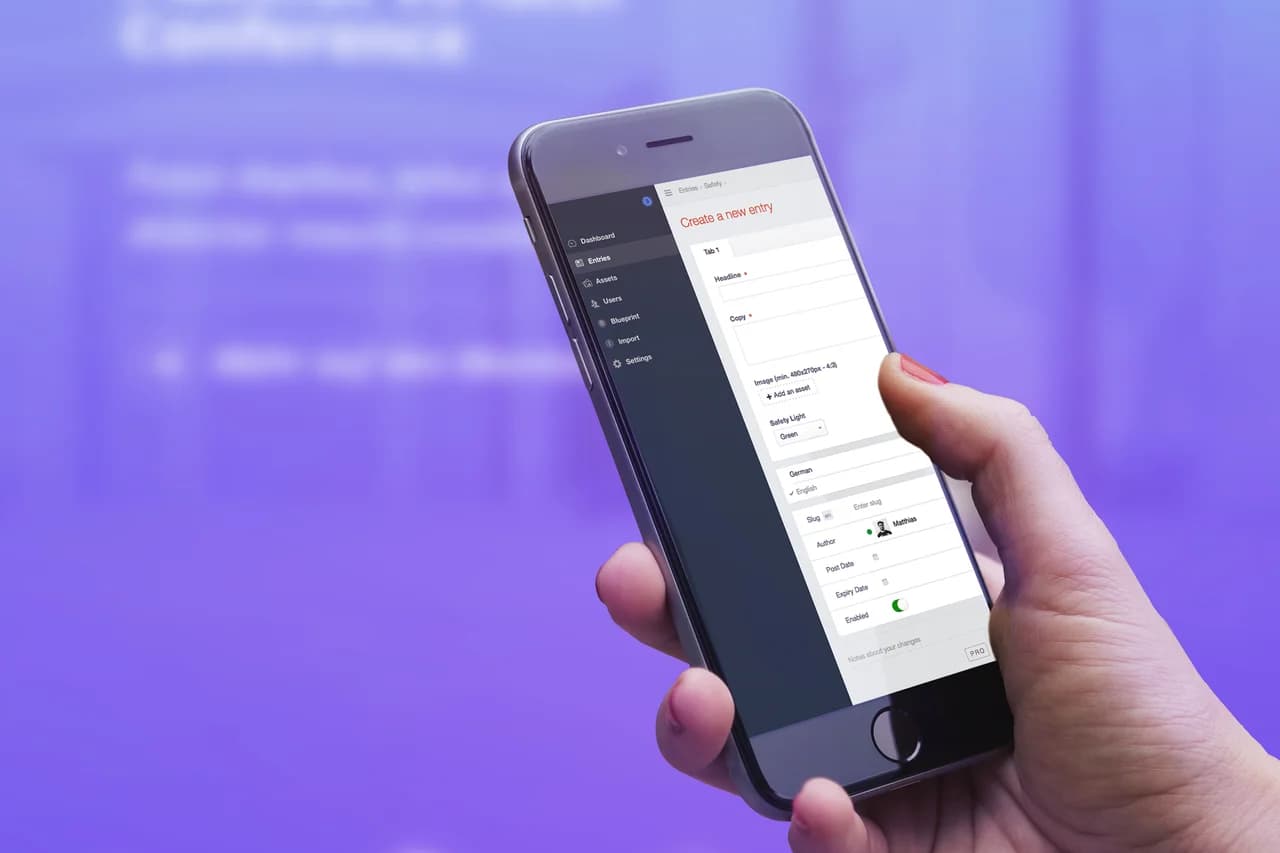
The solution includes a modular backend/CMS with defined author and publisher roles, automated data feeds from internal and external sources, and a rear-projected 4K surface with 8,847,360 pixels. Future 84" monitors will expand the information architecture in the building.
The project was divided into Discover, Prototype, Build, and Launch: requirements and touchpoints were identified, initial visualizations were tested, hardware and software were calibrated to the millimeter, and finally went live, making the Infowall immediately act as a central touchpoint.
Phases from idea to live operation.
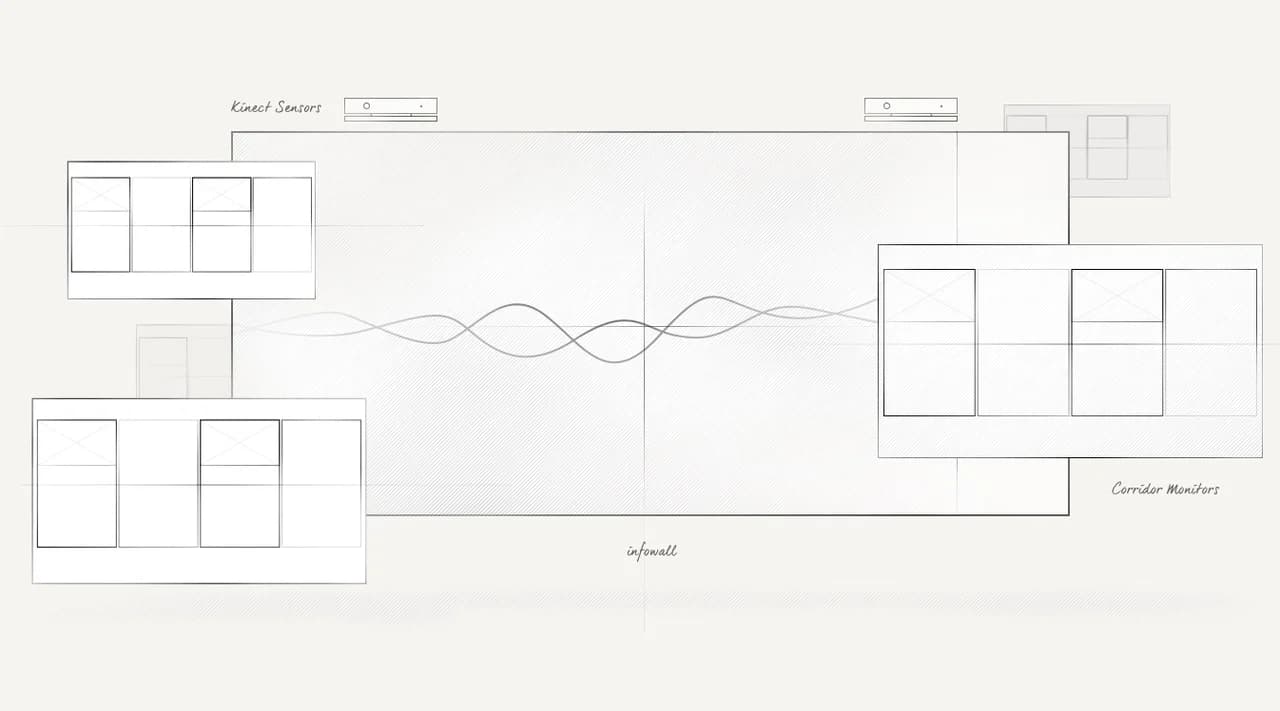
The Infowall operates with rear projection technology to avoid shadows, with finely tuned calibration at only 125 cm projector distance and bundled data feeds. Sensors like Kinect are planned so that visitors and employees can intuitively interact with the wall in the future.
Small details bring information spaces to life.
The precise tuning of hardware, content hierarchy, and visual staging had the greatest effect: employees find information as they pass by, visitors receive an inviting overview, and automated feeds keep the content permanently relevant.