WebGPU: the browser becomes a spatial platform
, Alexander El-Meligi
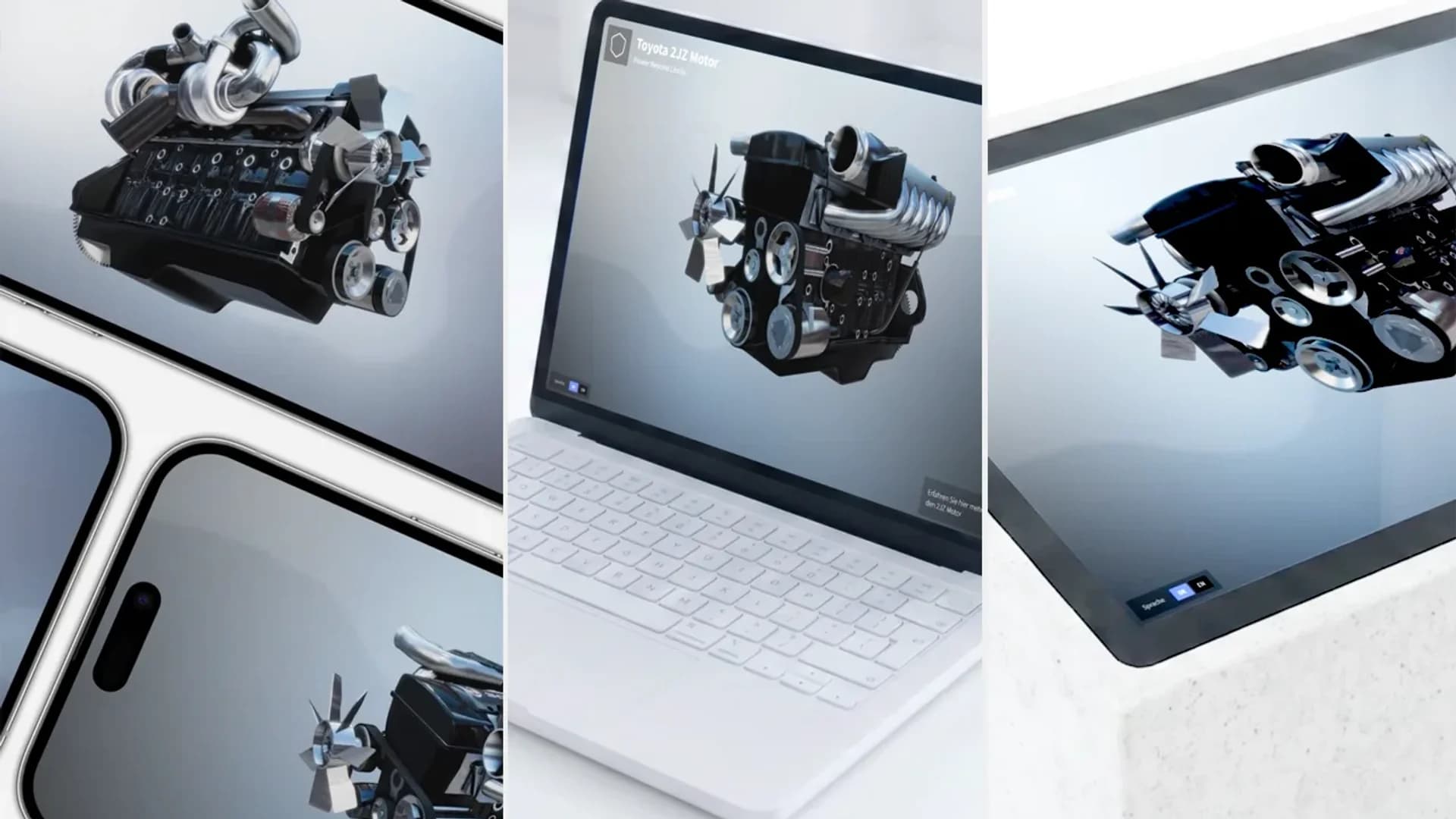
WebGPU now runs in all major browsers, and since September 2026 three.js uses it as its default renderer. What changes isn't so much the graphics as the distribution: rich 3D reaches almost any device that can open a link, with one build and one URL. That makes the browser the most universal spatial platform there is.
From promise to standard
Three years ago, I wrote about the potential of WebGPU. Back then it only ran in Chrome, while Firefox and Safari were still working on it. Today the Chrome team confirms official support in Chrome, Edge, Firefox and Safari.
Perhaps the most important step came in September 2026: three.js, the most widely used library for 3D on the web, made its WebGPU renderer the default, with WebGL 2 as a fallback. With more than twelve million downloads a week, a huge number of projects switched paths without most developers noticing.
It's about distribution
Three years ago, rich 3D in a browser meant a compromise: fewer effects, a heavy download, or an app after all. Now it's one build, one URL and near-native rendering on almost anything that opens a link. Phone, laptop and increasingly the headset.
Safari on visionOS 26 supports WebGPU too. Headsets are browsers as well now, and the same experience reaches the person on a train and the person wearing a headset.
What brands get
For brands, that's the part that counts. A product configurator, a virtual showroom, a spatial campaign: no app store, no download, no gatekeeper. And because the device renders itself, no server has to compute every frame for every visitor. That saves cost and latency, especially when many people arrive at once.
One system for every channel
That's the principle behind our 3D Product Explorer: the same system runs on the website, on tablets in sales conversations and on displays in showrooms or at trade fairs. The more universal the browser becomes, the further an experience built once can travel.
Not quite done
WebGPU isn't fully there yet. It still needs a WebGL fallback, Firefox has gaps on Linux and Android, and it isn't Baseline yet. Anyone building today should plan for both.
The direction is clear, though. The question is no longer whether rich 3D works in the browser, but what brands use it for.
Nobody had to install it
The browser just became the most universal spatial platform there is. And nobody had to install it.
See how we develop 3D and commerce experiences for web and app in Digital Commerce.