Measuring event success: build impact into the experience
, Alexander El-Meligi
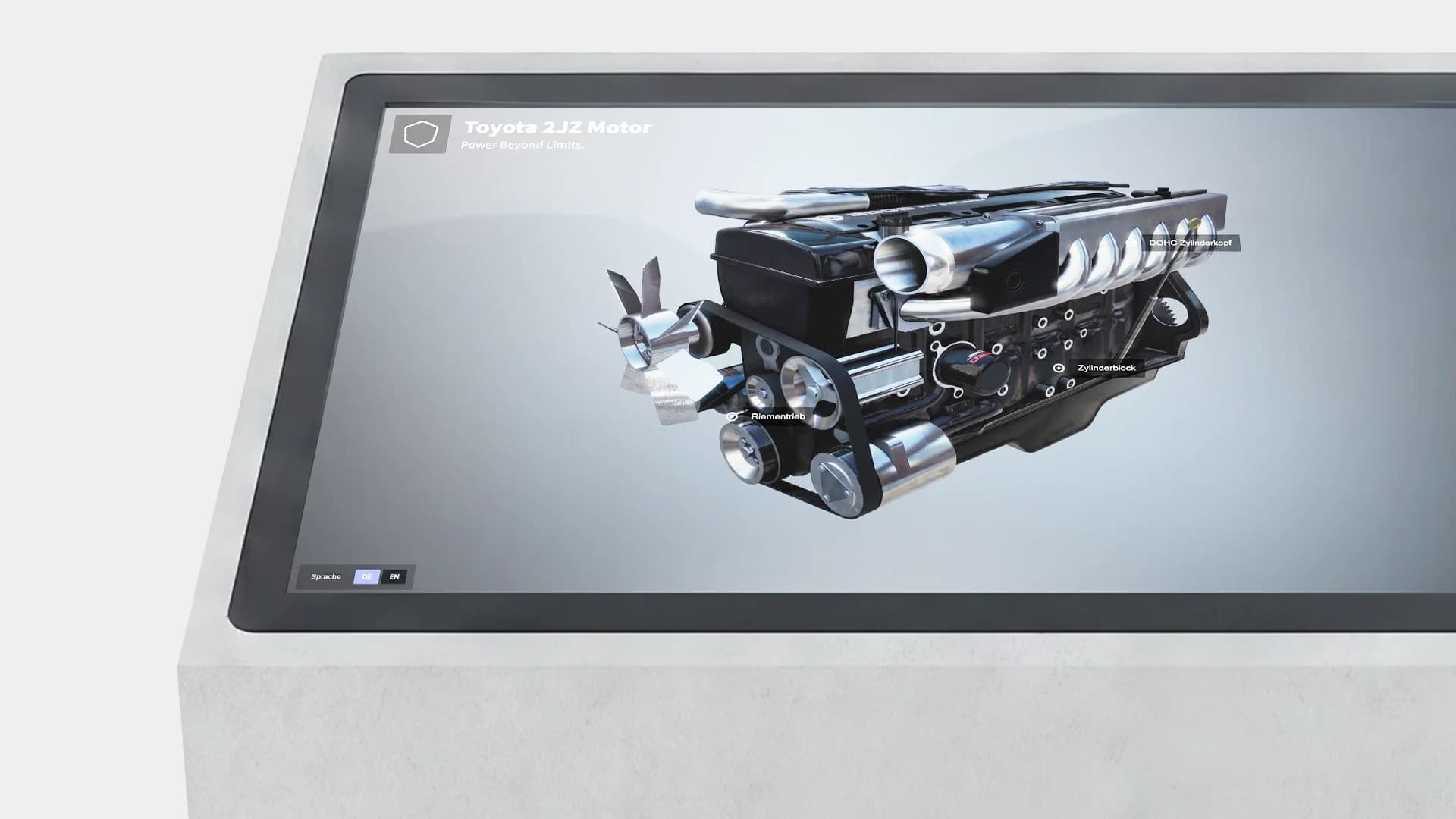
Events are among the most effective tools in marketing and, at the same time, among the hardest to measure. Instead of reconstructing their impact afterwards from badge scans and business cards, measurement can be built into the experience itself: when visitors interact with digital stations, the interaction generates valuable first-party data. Measurement stops being an extra layer and becomes an outcome of great experience design.
Reset to real
In an increasingly digital world, people are actively seeking real, shared experiences. Trend researchers describe this shift as "Reset to Real": a renewed appreciation for live moments that feel authentic, human and memorable.
That makes events more than marketing moments. They're one of the few places where trust, relationships and buying decisions are created in person. By that logic, they should be among the easiest investments to justify.
Impact that gets lost
In practice, it's often the opposite. The reason isn't that events lack impact. It's that much of their impact is hard to capture. The conversation that changes someone's perspective, the product demo that finally makes a complex solution click, the moment curiosity turns into buying intent: these rarely show up in a dashboard.
Instead, success is often reconstructed afterwards from badge scans, CRM data or business cards. Everyone involved knows that much of the original context has already been lost.
Measurement by design
I think we often approach the problem from the wrong direction. Rather than asking how to measure an event afterwards, we should design the experience so that meaningful engagement and measurement happen at the same time.
When visitors interact with AR, AI or other digital stations, the interaction itself generates valuable first-party data. Marketing gets better insights, and sales gets a much stronger starting point for the follow-up, because it knows what someone was genuinely interested in.
What this looks like
Our 3D Product Explorer runs on 4K displays at trade fairs and uses built-in analytics to show which product details draw attention: with hotspot heatmaps, time spent per component and conversion paths through to a QR scan or lead form. A QR code moves the experience from the booth to the visitor's own phone. The AI Assistant Terminal holds conversations on site and can connect to a CRM if needed.
Data needs trust
There's a clear line, though: data from an experience has to benefit the visitor, not just the exhibitor. Whoever measures has to be transparent and take consent seriously. With the terminal, we made that a principle: it's activated by touch, doesn't listen passively and processes data locally.
And not everything that counts can be measured. A good conversation with the people on the booth remains the core. Digital experiences don't replace it, but they can prepare it and give it a better foundation.
The better question
Before the next event, it's worth flipping the question. Not "How will we measure success?" but "Are we designing an experience that truly drives engagement in the first place?" Answer the second one well, and the first almost follows by itself.
Great experiences create engagement. Great experience design creates evidence. See how we design trade fair and event experiences that work and can be measured in Trade Fair & Event.