Gaussian Splatting: when photorealistic 3D becomes standard
, Alexander El-Meligi
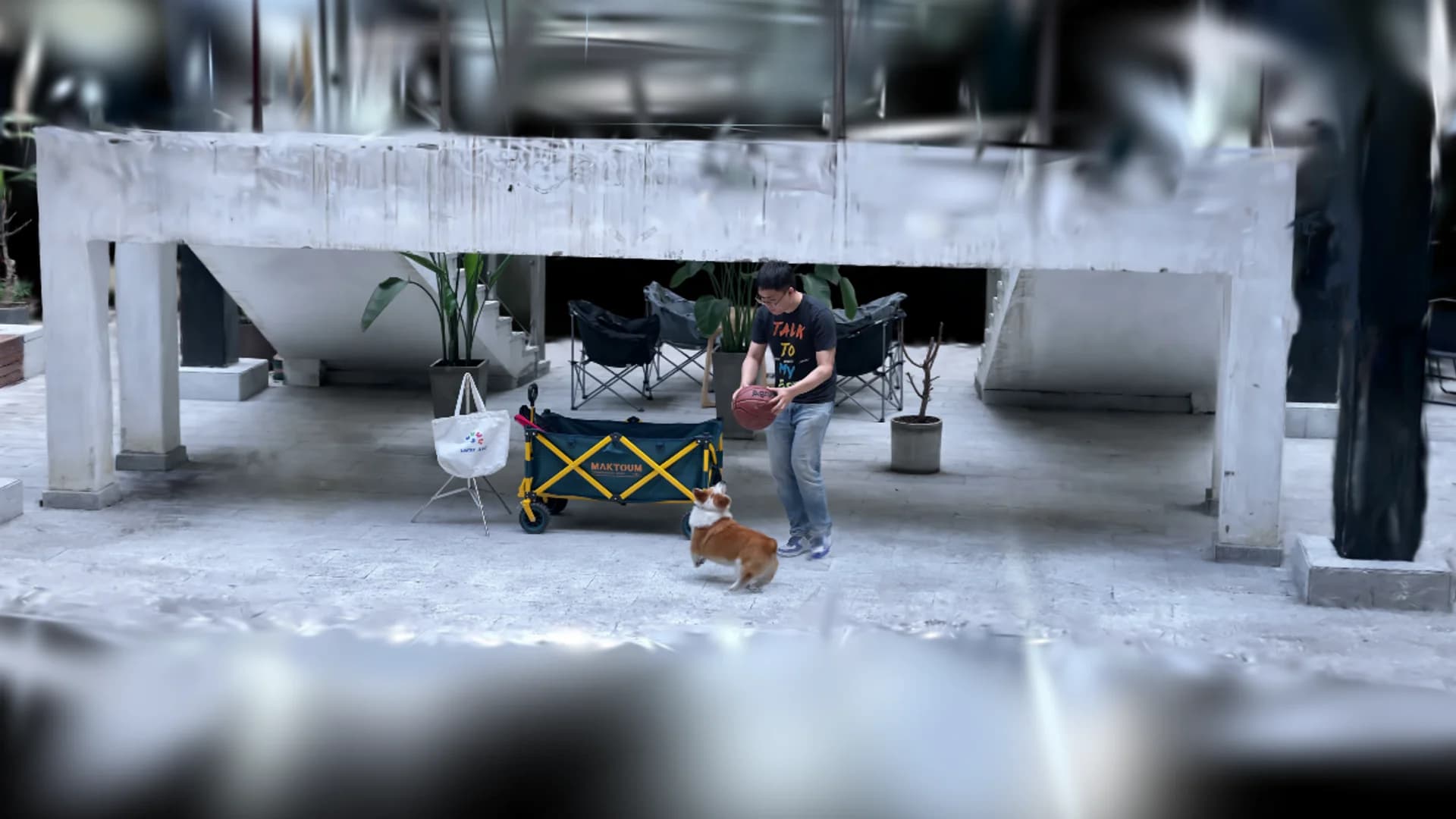
Gaussian Splatting is a technique that turns photos or videos into photorealistic 3D scenes. In 2026 it's becoming part of the major 3D standards glTF and OpenUSD, and 4D Gaussian Splatting adds time as a dimension. Photorealistic 3D is on its way from an impressive effect to a medium as easy to share as an image.
Capturing reality in 3D
Gaussian Splatting is a technology I'm watching very closely right now. The quality has become genuinely impressive. Whether it's an industrial site or something as small as the surface of a strawberry, reality can be captured in photorealistic 3D with an incredible level of detail.
Unlike classic 3D models, a splat doesn't describe a scene through triangles but through a large number of small, semi-transparent elements, each with a position, size, orientation and color. The result feels like a photo you can move around in.
Standards make it everyday
What I find even more interesting is what's happening around the technology. The Khronos Group, the consortium behind widely adopted 3D standards like glTF, presented an extension in February 2026 that stores Gaussian splats directly in glTF. It's a release candidate, the last step before it becomes an official part of the standard. Engines like CesiumJS, Babylon.js and PlayCanvas already support it.
And it's not only glTF. OpenUSD, the other major standard for exchanging 3D data, supports splats natively, and both sides are deliberately keeping things aligned so the same capture isn't locked to one format. I've learned to pay attention when standards move. That's usually the moment a technology stops being a demo and starts becoming infrastructure.
The fourth dimension: time
4D Gaussian Splatting adds what static splats were missing: time. The scene doesn't just exist, it plays. A person turns, fabric swings, a dog runs through the frame, and you choose your viewpoint while it happens. Not a video you watch, but a moment you enter.
NAB in spring 2026 showed it's more than a lab demo. Live scenes were reconstructed in real time with rigs of around sixty cameras and shown in VR on the spot. Newer pipelines track the scene continuously through time, which means less flicker and practically infinite slow motion. The barrier is dropping the same way it did for static splats.
What this means for brands
It gets exciting where it reaches beyond the 3D community. Inspecting a used car from every angle before buying it, exploring a product almost as if it were in front of you, or revisiting a place in a way that feels closer than any photo. With 4D, moments join in: a product launch from any angle or a concert from the front row.
Photography kept what a moment looked like, video kept how it unfolded. Volumetric capture keeps what it was like to stand there. On a phone, that's a neat effect. In a headset, it becomes presence. Volumetric memories might be exactly the reason headsets have been waiting for.
From our work
With our 3D Product Explorer, we show complex products interactively and photorealistically on the website, in the showroom and in AR. The models are built from CAD data, from photos or directly from the product. The easier photorealistic captures become to exchange, the more interesting capturing directly from the object becomes.
From effect to medium
We're not there yet. There's no shared standard for compression so far, streaming large scenes to mobile devices remains a challenge, and 4D capture still needs heavy hardware. But the direction is clear: once photorealistic 3D is as easy to share as an image, it moves from an impressive effect to an everyday medium.
We spent a century recording what things looked like. Next, we record what it felt like to be there. See how we build these experiences in Virtual Reality.