Immersion is a human state, not a tech spec
, Alexander El-Meligi
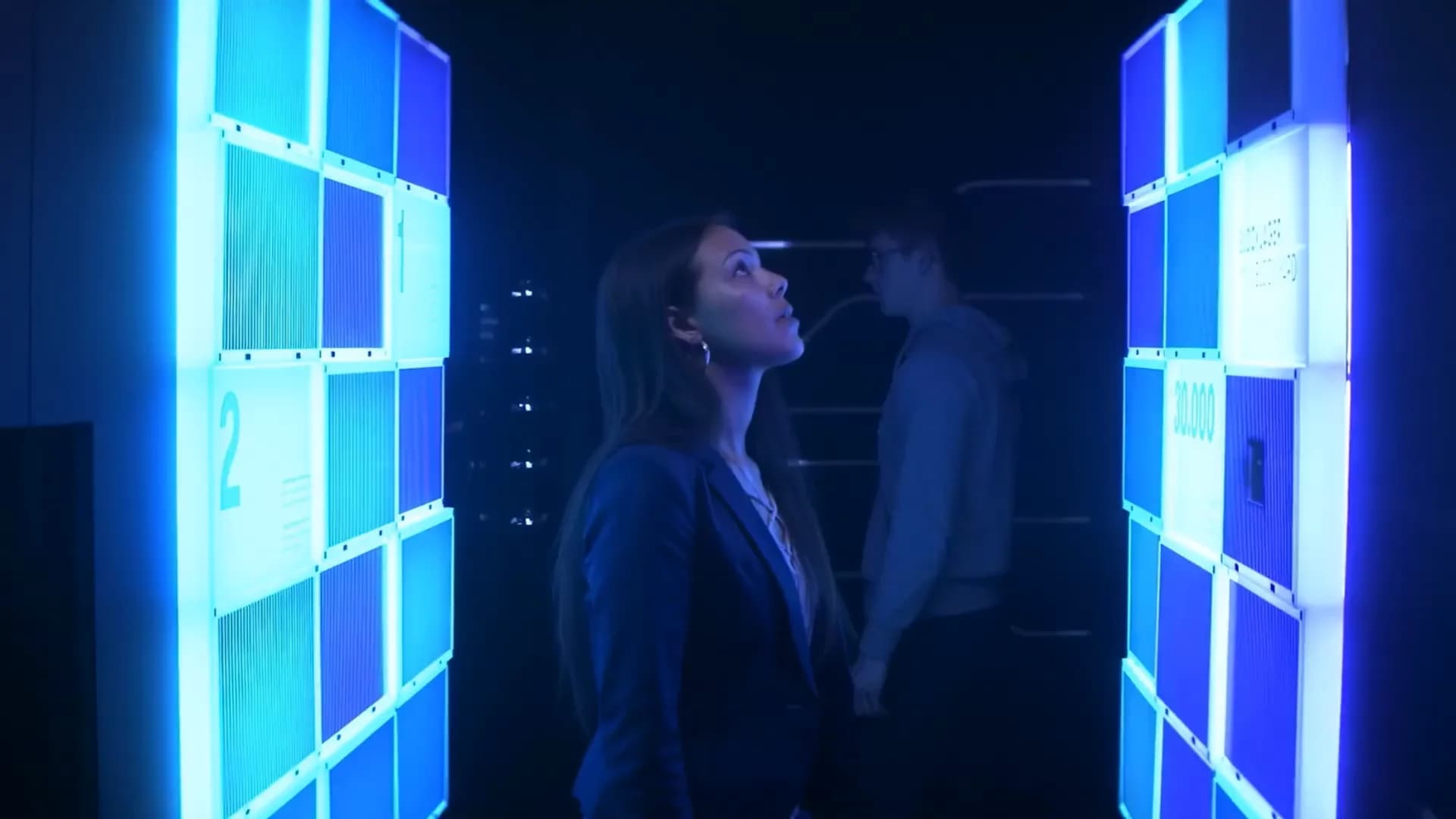
Immersion isn't a technical value but a human state. It doesn't come from pixels, tracking or a particular headset, but from content, design and the fit between message and medium. For brands, that means fidelity is a budget question, while immersion is a design outcome.
The wrong first question
Whenever immersion comes up in a project, the same question tends to follow: which headset do you recommend? How many pixels, how much tracking, screen or goggles? The conversation turns into a hardware decision before anyone has asked what the visitor is actually supposed to experience.
It's the same pattern as the question of when technology belongs in a concept: the technology decision gets made too early.
What really pulls people in
What pulls people into an experience is almost never the device itself. It's having a role in something that goes somewhere: a question raised, something at stake, a resolution.
In almost two decades of building immersive experiences, from browser games and trade fair booths to AR campaigns, VR training and rooms made of nothing but light, sound and story, hardware was rarely the deciding factor. When people lost track of time and told someone about it afterwards, the reason was never the spec sheet.
Immersion happens in people
Research points the same way. Dr. Miriam Mulders of the Learning Lab at the University of Duisburg-Essen describes immersion as something that happens in people, not in devices. It emerges from content, design decisions and the fit between message and medium. Even simple interactions can create it.
So fidelity is a budget line. Immersion is a design outcome, and you can design it into a browser, a booth, a room or a headset.
Using immersion deliberately
It also follows that immersion doesn't have to be everywhere. Often the strongest decision is to place it exactly where it changes something.
An example: our VR sales training
In a VR sales training, field sales staff practice conversations with AI-driven virtual doctors. By default, the app runs in mixed reality, with the real surroundings visible while emails and documents are handled. Only the one-on-one conversation is fully immersive, because that's the moment where presence changes behavior. Everywhere else it would just be in the way.
The device sets the stage
The device sets the stage. The experience decides whether anyone forgets where they are.
See how we design immersive experiences, from browser to headset, in Virtual Reality.