Participation matters more than attention
, Alexander El-Meligi
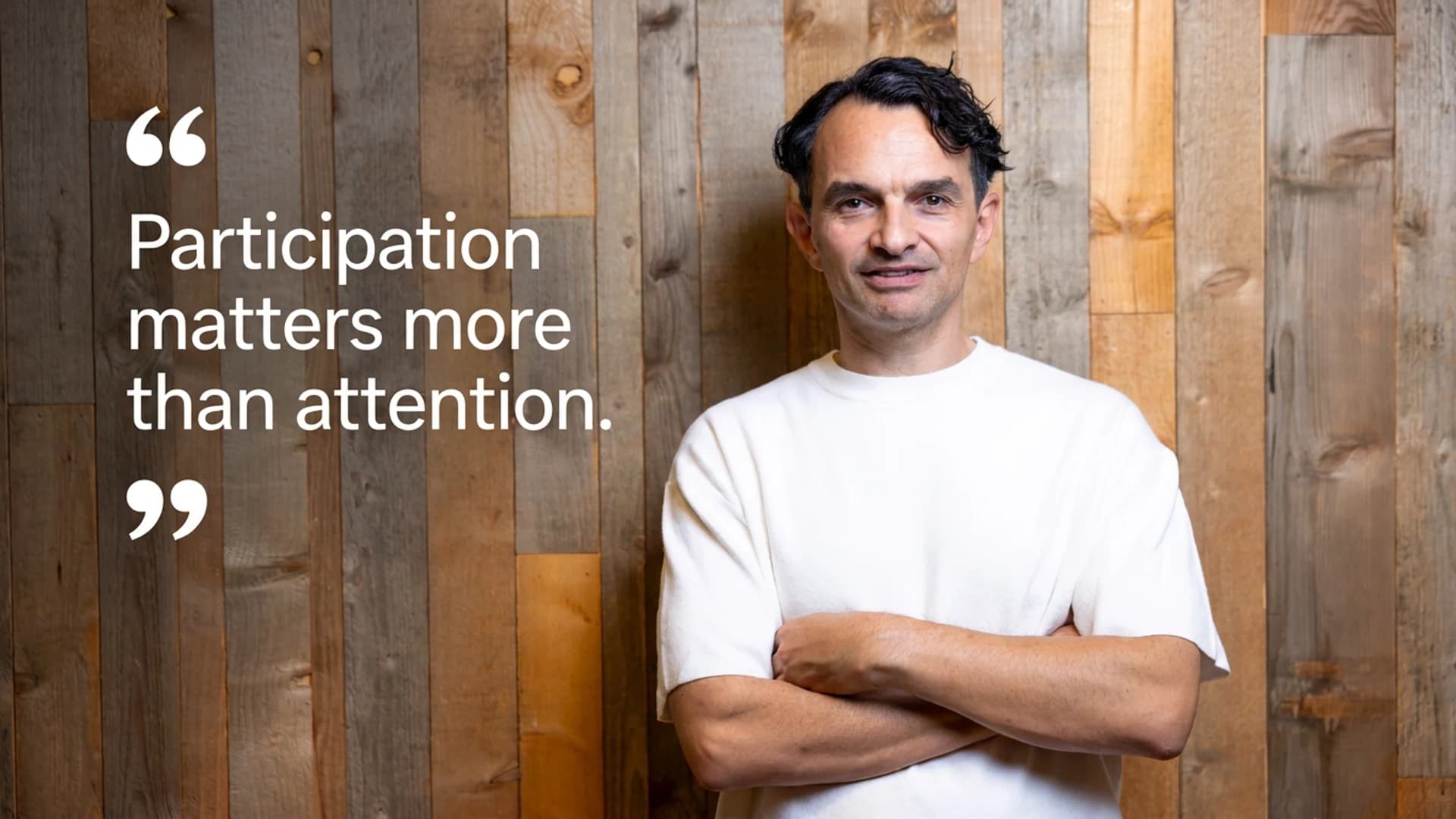
Reach, impressions and views say little about whether an experience actually had an impact. Participation says more, and it goes further than active involvement: watching someone immersed in an experience allows us to feel an echo of what they're feeling. For brands, that means an experience doesn't end at the edge of the room. It can reach people who were never there.
Beyond attention
For years, marketing has been built around attention. Reach, impressions, views and visibility still matter. But they tell us surprisingly little about whether an experience actually had an impact.
What interests me more is participation. And I've come to think the term needs a wider definition than active involvement.
Feelings travel
At our showroom event in Hamburg in September 2026, we discussed an idea I haven't been able to let go of since: an immersive experience can create a feeling that can't simply be manufactured. And feelings travel.
Through affective empathy, watching someone immersed in an experience lets us feel an echo of what they're feeling. We didn't touch anything or influence what happened, and yet we took part. A photo of something impressive, on the other hand, is rarely impressive itself.
Feeling, not just registering
The dividing line, then, isn't between doing and watching. It's between feeling something and merely registering it.
Active involvement remains the strongest form, for example when a game turns viewers into participants rather than an audience. But it isn't the only one. Watching someone else lose themselves in an experience can make you part of it too.
The experience beyond the room
That changes the job. Most of the care goes into designing the moment in the room. What happens to the experience afterwards is often left to whoever happens to film and share it. But if a feeling can travel, the question is no longer just how many people saw the experience, but how many took part in it, including those who were never in the room.
Honestly, there's no simple metric for that yet. Comments, shares and conversations are signals, but not the full picture. That's exactly why it's worth designing the impact beyond the room into the concept, instead of leaving it to chance.
What we saw at our own event
At our showroom event, guests could try mixed reality, interactive applications and games for themselves. One thing became clear: some things only work when you're standing in front of them. Others also work as a clip, because you can see what happens to the person using them. That second effect can be designed.
Attention can be bought
For our work, that means it's not about adding another screen simply because it's possible. The question is whether technology gives people a reason to feel involved, and whether that involvement changes how they see the brand.
Attention can be bought. Genuine involvement is much harder to create. See how we design experiences that work beyond the moment in Trade Fair & Event.