Reset to Real: why people share experiences and trade shows are becoming places to experience
, Alexander El-Meligi
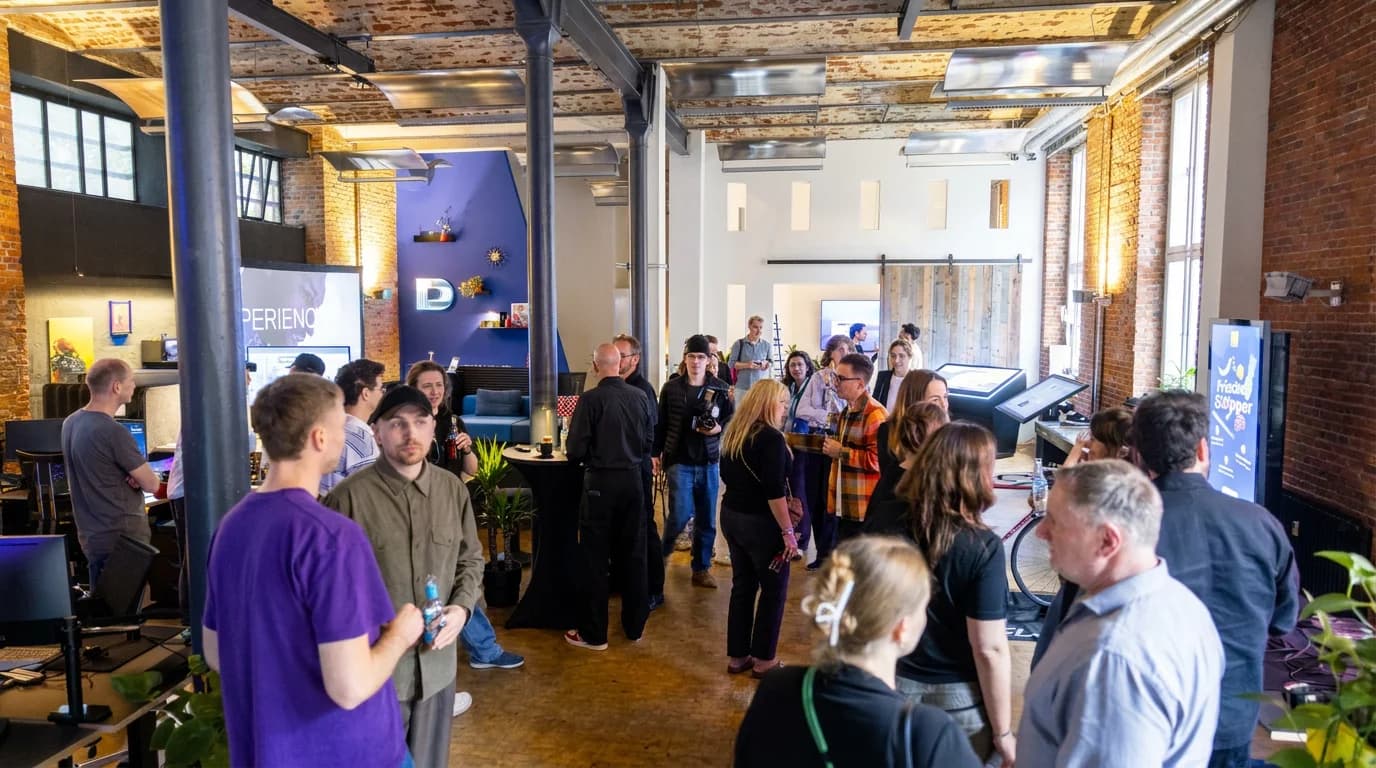
Reset to Real is what Eventbrite calls the return to real, shared experiences. The trend has two sides: in private life, experiences gain social value because people retell them. In business, trade shows and events are turning into places where you experience something instead of just being shown something. For brands, that means: don't build photo spots, build moments people will retell.
Back to the real
The easier digital content becomes to produce, the more valuable moments become that people have actually lived through. I explored that idea in my guest article for HORIZONT, including the figures from Eventbrite's Social Study, which gave the movement its name: Reset to Real.
A look at the live industry shows how robust the demand is. Live Nation sold more than 143 million tickets through mid-July 2026, over 14 million ahead of the previous year's pace. What interests me, though, is less the volume than the question of what people do with these experiences. And why the same trend is now reaching exhibition halls and business events too.
Experiences are something to talk about
An experience doesn't end when you go home. It lives on as soon as you tell someone about it. Psychologists Amit Kumar and Thomas Gilovich showed that people talk far more about experiences than about things they've bought, and that part of the satisfaction comes from exactly that telling. Take away the chance to talk about it, and the enjoyment of the experience itself drops.
That explains why experiences become social currency. When you tell people where you were and what you experienced, you're also saying something about yourself: what you care about and where you belong. What I find fascinating is how sharing is changing in the process. Eventbrite CEO Julia Hartz describes a generation that is done with performative get-togethers. People still share, but more often the real moment than the perfect picture.
For brands, that's an important difference. A photo spot creates a post. A moment you were part of creates a story you're still telling weeks later.
Business is following
The same trend is showing up in B2B, and in the place you might least expect it: at the trade show. In the AUMA Exhibitor Outlook 2026/2027, 97.5 percent of the German exhibitors surveyed call trade shows an indispensable platform for exchange, innovation and business development. 77.5 percent rate them as an important or very important marketing instrument. The field is growing internationally too: PwC expects global trade show exhibiting spend to rise from 38 to 44.6 billion US dollars by 2030, driven by demand for face-to-face interaction.
At the same time, what visitors are looking for is changing. In a study by AUMA and Prognos, 56 percent of organizers see the event character becoming more relevant, and the authors expect the experiential side of trade shows to move even further into focus. According to the AUMA Exhibitor Outlook, 44.1 percent of exhibitors name attracting and activating visitors in the first place as a key challenge. The classic booth that displays products and waits for conversations is less and less enough.
The study also sets an important accent, though: business relevance comes first, pure show value second. In business, experience isn't an end in itself. It's the path by which a visit turns into a conversation.
Brands are building experience venues
How far this has already come was visible in Cannes in June. Cannes Lions has long been more than a festival with a stage program. Along the Croisette, brands created well over a hundred activations of their own, from beaches and lounges to entire small neighborhoods. I described some of them in my article on event spaces as a third place.
How seriously brands now take this is shown by Zalando. In early October, the online retailer announced a festival of its own: Access All Areas, in Berlin in April 2027, for up to 40,000 guests and with 14 brand partners from Adidas to Nike. Tickets are free for Zalando Plus members, and access opens exclusively to them. A company that grew up online is making the real-world experience the core of its customer loyalty. Its origin is telling too: the festival builds on Bread & Butter, a former Berlin fashion trade show that Zalando had already turned into a consumer festival once before.
An example: Pinterest
For me, Pinterest's Manifestival was the most consistent. Guests received a sticker on arrival reading "Less URL, More IRL", along with the invitation to put their phones away. Instead of photo spots, there was a tattoo parlor, personalized desserts and an Offline Social Club where people wrote postcards by hand that could be sent via La Poste. As CMO Claudine Cheever put it, the most meaningful thing you can find online is a reason to go offline. The postcard is the nicest detail: it gets shared, but with a person rather than a feed.
Not less digital
As an experience technology agency, one thing matters to me: Reset to Real doesn't mean less digital. It means technology gets a different job. It's no longer the attraction itself but has to support the purpose of an experience. Add it to a finished concept at the end, and you get one more screen. Think it in from the start, and you get a better experience. I've written in more detail about why technology belongs in the concept, not at the end.
Used well, digital experience can even create exactly the unique moments Reset to Real is about: a result that applies only to you, a product you can explore in every variant, or an encounter that unfolds differently with every group. Even Pinterest didn't do without technology in Cannes. In the Visual Search Studio, guests used visual search to put together their own style and took home a printed journal of it. Created digitally, taken home physically, retold in the end.
Digital also extends the experience beyond the space. Zalando accompanies its festival with livestreams and exclusive drops in the app, for everyone who can't be there in person. So the real contrast isn't between digital and real, but between technology that distracts from the moment and technology that makes it possible in the first place.
What brands can take from it
For me, both sides of the trend come together in one clear task. Brands shouldn't ask which visual works on social media, but which moment people will retell afterwards. Those are usually moments where they do something themselves: try, create, decide or experience something together with others. If you only watch, you have little to tell. I've written elsewhere about why participation carries further than attention.
A current example is L'Oréal Paris's three-day pop-up in Berlin. Instead of efficacy claims, there were skin analyses and tests to try yourself. What people had to share afterwards wasn't a photo spot but something they had tried themselves. To be honest, the number of posts such an experience generates still remains a weak metric: it shows that people talk, not what the experience achieved for the brand. How impact can be built into the design from the start is covered in the article on measuring event success.
That's why, for me, Reset to Real isn't a return to the events of the past. It's the chance to build spaces people remember because they experienced something there worth telling. See how we develop experiences for trade shows and events in Trade Fair & Event.